Size & Type
Other

$345
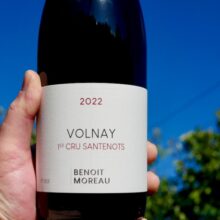
Both Alex & Benoît made a Volnay 1er Cru Santenots in 2022.
Officially located just south of the Volnay border in the commune of Meursault, the vineyard’s Chardonnays must take the Meursault title. Santenots Pinot Noir reds are usually lush and rich with good structure, ripe tannins and good ageability.
The large vineyard is on the steep mid-slope of the east-facing Côte d’Or hillside (although with something of a southeast aspect here) above the flatter land below. Despite being in the commune of Meursault, an appellation famed for its white wines, Santenots is predominantly planted to Pinot Noir.
The soils in Santenots differ slightly to those in the rest of Volnay: they are made of harder limestone and are redder in color, betraying a reasonably high iron content and proportionally more clay, giving good body and richness to wines from the site.
Santenots’ position on the Côte d’Or gives it a favorable mesoclimate for wine production, as the south-southeast aspect gives it plenty of exposure to the sunlight. This, coupled with protection from the wind, means that the grapes have plenty of time to ripen, and do so slowly and evenly, retaining acidity, while developing flavor.
In stock
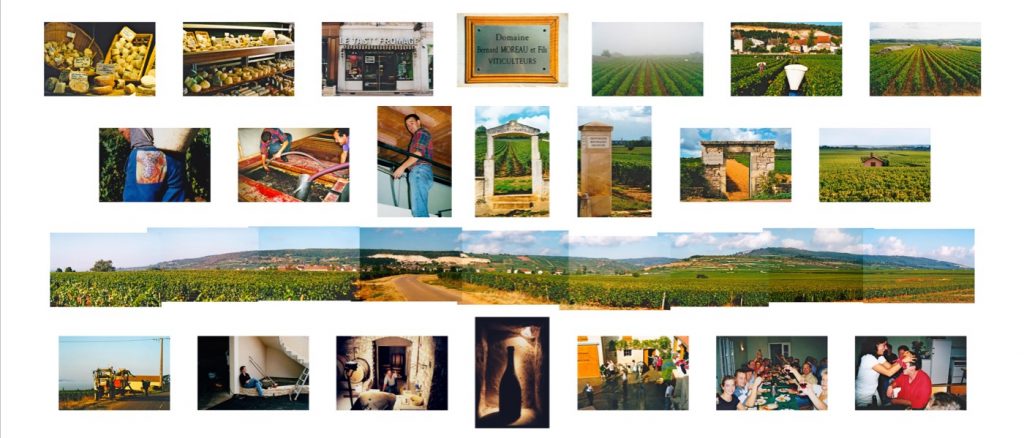
Several years ago when I heard the news that Domaine Bernard Moreau was being split between brothers Alex and Benoît I felt a little sad. Alex worked with me when I was making wine at Yering Station in 1999 and I was fortunate to work vintage with him later that same year.
I respect the desire for each brother to take their own path. Even with the prices of Burgundy and access to owned vines it’s an immense challenge when a Domaine is split between sibling.
Benoît set up his own domaine in November 2020. With the 2022 vintage, I’m excited, for the first, to have the opportunity to compare the wares of each brother!
“His 2022s matched [the 2021] wines, but his 2023s appear to go even further. Indeed, tasting them, I had the impression that I was sampling an entirely different vintage from what I had encountered at many other addresses, due to the rare sense of energy and tension, combined with full maturity, that Moreau seems to have achieved.”
William Kelley, The Wine Advocate“Readers will already be aware that I am a big fan of Moreau’s wines to the extent that I have given some of my highest scores for any Chassagne-Montrachet.”
Neal Martin, Vinous
In tandem with his new domaine, Moreau has established a striking (small) project in Beaujolais with a close friend. The focus is on super-elegant Gamay wines sourced from 1.7 hectares of old-vine vineyards in Morgon and Chiroubles. The high-altitude vineyards, the lowest of which lies over 400 metres, are biodynamically farmed—a huge undertaking for old bush vines rooted in poor granitic soils—while the winemaking marries semi-Burgundian winemaking in a significant departure from the Beaujolais norm. It is a level of farming rarely seen in the Beaujolais, reflected in the quality and (necessarily) the pricing of the wines.

Split across 25 parcels, the new domaine vineyards cover a tiny 4.2 hectares (so the volumes are small!), complemented by a little purchased fruit from Volnay. The farming is meticulous, with three full-time workers in winter and eight in the season—two people per hectare! Farming at this address is biodynamic, with certification underway, and Moreau is committed to working all his premiers crus by hand, horse or with the aid of small caterpillar-tracked chénillards. In some parcels, he’s experimenting with “tressage” instead of hedging the vines’ canopies; and when he does hedge, it’s done by hand. Green cover crops will help build up organic matter in the soils and protect them from summer heat.
Like several of his peers today, Benoît crushes his Chardonnay before slowly pressing to a range of barrels (228-, 350- and 500-litre) from Stockinger, François Frères and Damy. Very little new oak is used, and fermentations are all spontaneous. Regardless of level, all the whites are bottled in March after two winters in the cellar (except for the Grandes Ruchottes, which ages for 18 months in cask and is released a year later). Bottles are sealed under high-quality natural cork and finishing wax.
On the red front there is scant information on Benoît’s approach. I can say, I’ve had the great pleasure of drinking many bottles of Domaine Bernard Moreau’s 1978 & 1979 Chassagne-Montrachet Rouge 1er Cru ‘La Cardeuse’ at between 20-35 years old. They’ve brought immense joy, demonstrating just how good reds from the village can be.
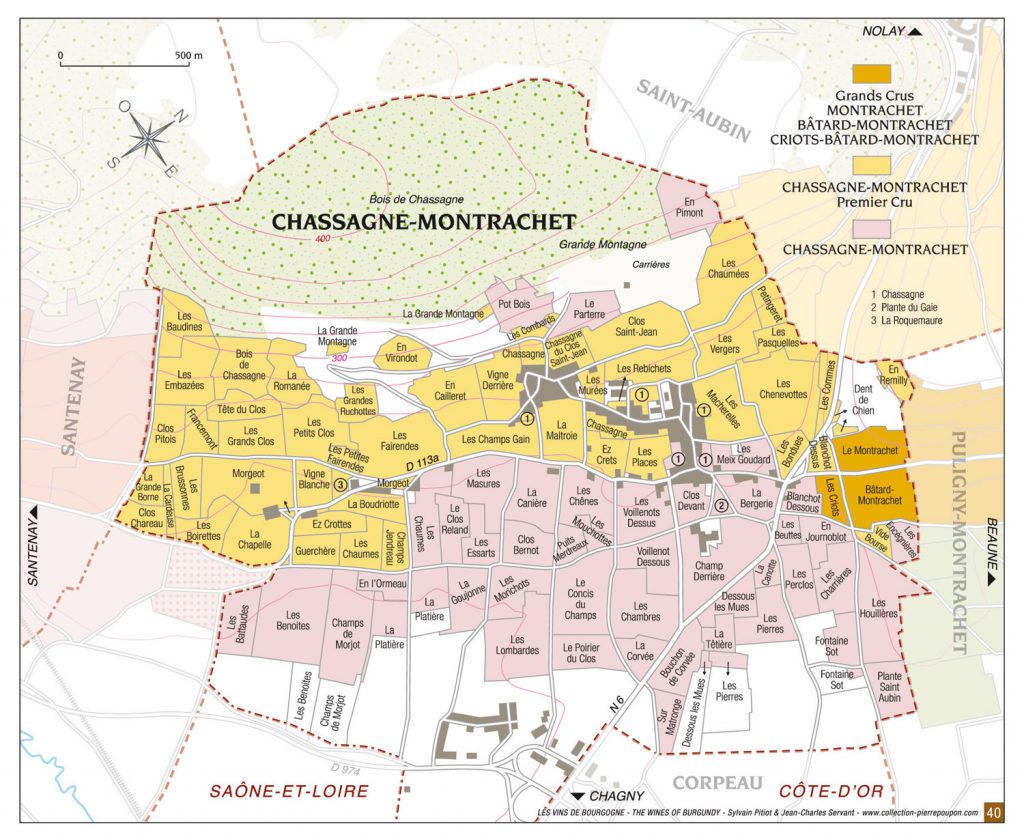
Benoît is based in Chassagne-Montrachet, Côte du Beaune, Burgundy, France. He works with fruit from Chassagne-Montrachet, Saint-Aubin, Volnay, Aloxe-Corton, and Puligny-Montrachet. This wine comes from 3 plots in Chassagne.

You must be logged in to post a comment.