Denominazione di Origine Controllata e Garantita [DOCG]


Quality assurance label for Italian wines. The system is modeled on the French Appellation d’origine contrôlée (AOC) designations.

« Back to Wine Words Index

English: controlled designation of origin) is a quality assurance label for Italian wines. The system is modeled on the French Appellation d’origine contrôlée (AOC) designations. The Italian government introduced the system in 1963 and overhauled in 1992 to comply with European Union law on protected geographical designations of origin, which came into effect that year.

There are three levels of labels: DO — Denominazione di Origine (designation of origin, seldom used), DOC — Denominazione di Origine Controllata (controlled designation of origin), and DOCG— Denominazione di Origine Controllata e Garantita (controlled and guaranteed designation of origin). All three require that a food product be produced within the specified region using defined methods and that it satisfy a defined quality standard.

The need for a DOCG identification arose when the DOC designation was, in the view of many Italian food industries, given too liberally to different products. A new, more restrictive identification was then created as similar as possible to the previous one so that buyers could still recognize it, but qualitatively different.

A notable difference for wines is that DOCG labelled wines are analysed and tasted by government–licensed personnel before being bottled. To prevent later manipulation, DOCG wine bottles then are sealed with a numbered governmental seal across the cap or cork.

Italian legislation additionally regulates the use of the following qualifying terms for wines: Classico (classic): reserved for wines produced in the region where a particular type of wine has been produced “traditionally”. For the Chianti Classico, this “traditional region” is defined by a decree from July 10, 1932, and Riserva (reserve), which may be used only for wines that have been aged at least two years longer than normal for a particular type of wine. Wines labelled DOC or DOCG may only be sold in bottles holding 5 litres or less.

For wines produced in Bolzano, where German is an official language, DOC may alternatively be written as Kontrollierte Ursprungsbezeichnung and DOCG may be written as Kontrollierte und garantierte Ursprungsbezeichnung.
Synonyms:
D.O.C.G, D.O.C, D.O, Denominazione di Origine, Denominazione di Origine Controllata, Denominazione di Origine Controllata e Garantita
« Back to Wine Words Index

Feeling Thirsty?

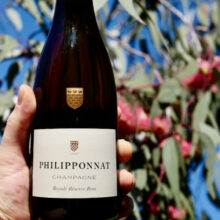
Philipponnat Royale Reserve HALF NV

Blend | Mareuil-sur-Aÿ, Champagne

Disgorged in June 2020 with eight grams per liter dosage, the latest release of Philipponnat's NV Brut Royale Réserve is based on the 2016 vintage, with 27% reserve wines. Offering up aromas of peach, pear and plum mingled with apple blossom and sweet pastry, it's medium to full-bodied, fleshy and expressive, with a pillowy mousse and a generous core of fruit, underpinned by bright acids.William Kelly
$68
$65ea in any 3+
$62ea in any 6+
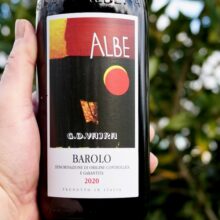
Vajra Barolo 'Albe' 2020
🇮🇹A Vajra Classic 🍷

Vajra Barolo ‘Albe’ 2020

Nebbiolo | Piedmont, Barolo (sub-region)

You can't beat this value. The G.D. Vajra 2020 Barolo Albe is buttoned up with fresh primary fruit, and the wine does not have that hint of over-ripeness that is found across this vintage. The fruit is dark and savory, and there is a big mineral component to match, but the bouquet is nicely redolent of dark currant, plum, granite and a raspy dry note that brings crushed shale to mind. The tannins are quite impactful, and they give this wine extra runway for moderate bottle aging.Monica Larne
$111
$106ea in any 3+
$101ea in any 6+
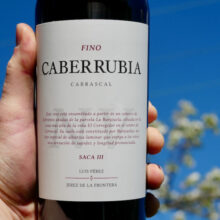
Caberrubia is Bodegas Luis Pérez's answer to NV Grand Cru Champagne! 'Caberrubia' is the name of a local bird which has returned to these vineyards since they were converted to organics. All natural alcohol. It's saline, iodine, balsamic, deeply chalky, deeply savoury, rich with balancing bitterness. Drinking it is like skiing down an intermediate slope, deep and winding but not too rushed, there's heaps of time to explore the chalk and every delicate switch and fold of texture and flavour.
$150
$143ea in any 3+
$136ea in any 6+
This is the largest and most famous Grand Cru; its fame based on its history as one of Chablis’ first vineyards. The appellation enjoys a southerly aspect with very white, dense and deep clay soil, resting on a limestone bed 80 cm below the ground, which brings to the wine those spicy notes so typical of this terroir.Note: from 4 separate parcels totaling 4.11 ha, 3 of which are all at the top of the slope.A cool, restrained and airy nose grudgingly divulges its combination of lem
$662
$642ea in any 3+
$622ea in any 6+