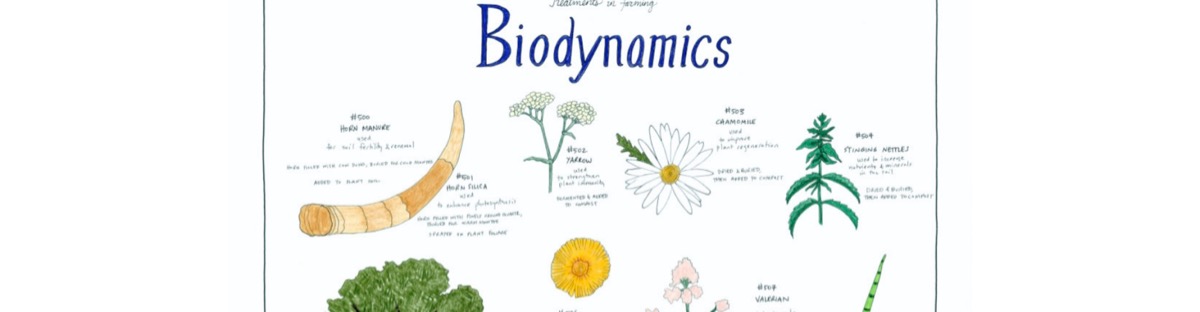

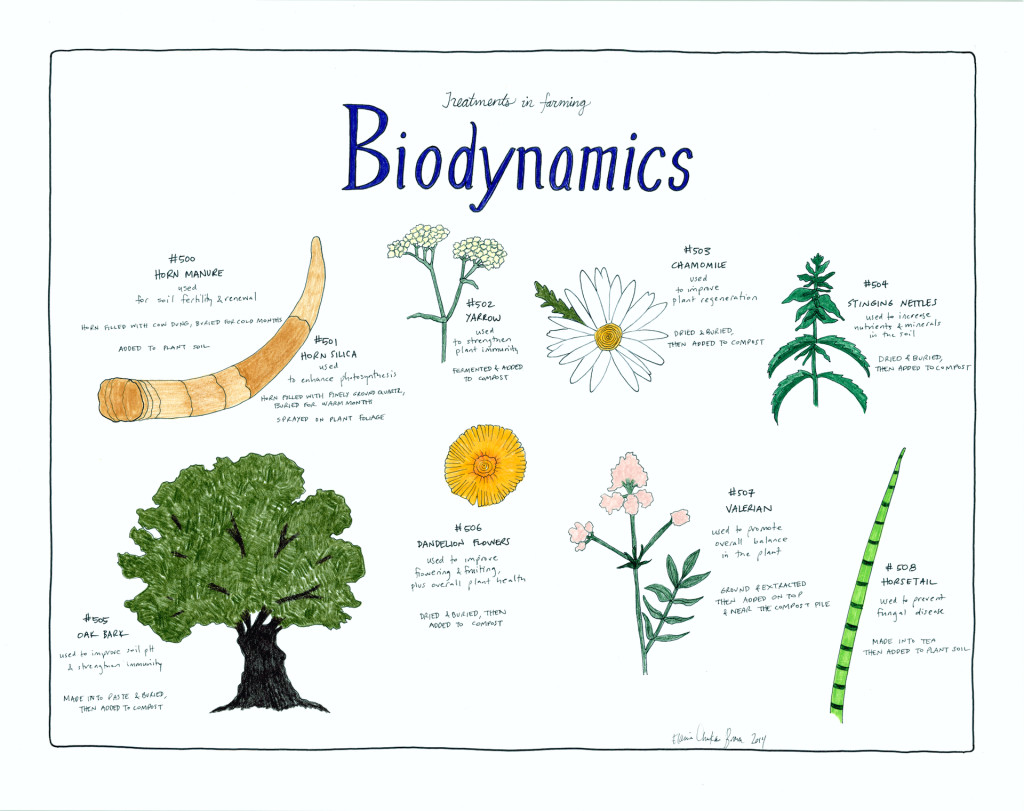
Biodynamics has been called a cult, a pseudoscience, witchcraft.
Katia Nussbaum of San Polino in Montalcino has written a superb essay on the subject.
“[She] argues that we need to reframe biodynamics for the twenty-first century. After long discussions with her, Walter Speller persuaded her to write this very personal, wide-ranging essay.” 🐂Many of the practices of biodynamics support production of quality wine for example yields are inherently lower. 🍷🍇In the glass, many biodynamic wines are impressive drinks. 🕰Yet little has changed since it was developed by Rudolf Steiner in 1924 it is near 100 years old.
As of 2019, biodynamic techniques were used on 187.549 hectares in 55 countries. Germany accounts for 45% of the global total;[10] the remainder average 1750 ha per country. Biodynamic methods of cultivating grapevines have been taken up by several notable vineyards. There are certification agencies for biodynamic products, most of which are members of the international biodynamics standards group Demeter International.
Steiner had the extraordinary intuition of the farm as a living organism. Through a modern-day lens we can view this as a part of the homeostasis of the ecological systems of the planet earth; Earth as Gaia. Steiner had ideas that pre-dated the organic movement, but elucidated them using the analytical tools and culture of his times and environment. He wrote in the absence of highly powered microscopes and understanding of quantum physics and string theory. He worked through categories and essential truths, through notions of dichotomy, such as the male and female, through astrology and metaphor.
Now we know more about plant communication, about ecosystems and biomes, about physics, about biology, chemistry, about DNA, and much, much more. And now we have much better analytical tools to hand that can help us understand the how and why of Steiner’s original notions, which we can update to practise in a useful way. Katia Nussbaum
Perhaps it’s time that we build the science and wisdom gleaned over the last 100 years into biodynamic practices! 🕸🐞🐝🌱Nature is a complex system that we still have much to learn about. Why not continue to evolve as we go and take the best of everything?
This is perhaps the reason I prefer the term biological farming that can encompass knowledge as it evolves, incorporating any relevant field, think permaculture, organics, microbiology, micology🍄, soil science and many more. It has been great to see many vignerons push to understand more, calling on leading experts across diverse fields of science to share their knowledge. I reckon those that take the best bits from everything and seek deep understanding will come out on top!
Biodynamic agriculture is a form of alternative agriculture very similar to organic farming, but it includes various esoteric concepts drawn from the ideas of Rudolf Steiner (1861–1925). Initially developed in 1924, it was the first of the organic agriculture movements. It treats soil fertility, plant growth, and livestock care as ecologically interrelated tasks, emphasizing spiritual and mystical perspectives.
Biodynamics has much in common with other organic approaches – it emphasizes the use of manures and composts and excludes the use of artificial chemicals on soil and plants. Methods unique to the biodynamic approach include its treatment of animals, crops, and soil as a single system, an emphasis from its beginnings on local production and distribution systems, its use of traditional and development of new local breeds and varieties. Some methods use an astrological sowing and planting calendar Biodynamic agriculture uses various herbal and mineral additives for compost additives and field sprays; these are prepared using methods that are more akin to sympathetic magic than agronomy, such as burying ground quartz stuffed into the horn of a cow, which are said to harvest “cosmic forces in the soil.”
No difference in beneficial outcomes has been scientifically established between certified biodynamic agricultural techniques and similar organic and integrated farming practices. Biodynamic agriculture lacks strong scientific evidence for its efficacy and has been labelled a pseudoscience because of its overreliance upon esoteric knowledge and mystical beliefs.
What do you think?

You must be logged in to post a comment.