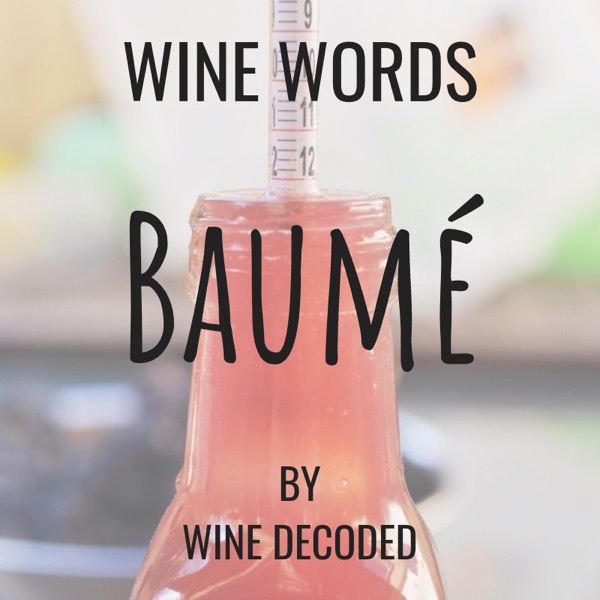
Baumé [Bé]


Baumé & Brix are unit of measurement for the amount of sugar in grape juice and fermenting wine.

« Back to Wine Words Index

Baumé, pronounced Boh-May, & Brix are units of measurement for the amount of sugar in grape juice and fermenting wine.

1°Bé = 1.8°Brix = 18 grams per litre sugar.

Depending on the efficiency of the yeast in converting sugar to alcohol 1°Bé will produce 1-1.1% alcohol. So fruit picked at 12°Bé will result in a wine with 12-13.5% Alcohol.

We measure Baumé & Brix using hydrometers that float in juice and wine.

On the left is a hydrometer and thermometer just about to measure the Baumé and temperature of the fermenting wine. On the right a hydrometer measuring the Baumé of a juice sample to check the sugar levels before picking. You can see it is at about 12.4°Bé. Enough sugar to make a wine with somewhere between 12.4-13.5% alcohol.

The Mega Technical Bit

The reading needs to be adjusted for the temperature of the liquid. We’re measuring the density of the liquid which will be more dense at lower temperatures and less dense at higher temperatures. As fermentation progresses alcohol production reduces the density of the liquid. By the end of fermentation, a hydrometer will need to read negative to indicate all the sugar has been consumed.

A hydrometer can not accurately measure very low levels of sugar. Other tests have to be used to determine precisely how many grams per litre of sugar remain in the wine.
 

Synonyms:
Brix
« Back to Wine Words Index

Feeling Thirsty?

Vietti Barolo Riserva 2015
1st Release of Barolo Riserva!

Vietti Barolo Riserva 2015

Nebbiolo | Piedmont, Barolo

Show the class of the vineyards and the winemakers! Here's an exciting new submission from Vietti that takes us to a whole other level (and evolutionary timeframe). A very late release that is held back at the winery, the 2015 Barolo Riserva sources its fruit solely from Castiglione Falletto. In fact, it represents a special section of the best sites that go into the Barolo Castiglione. Some of that fruit was so impressive, I am told, the decision was made to age it longer (with up to 30 months
$325
$315ea in any 3+
$305ea in any 6+

Massolino “Parussi” Barolo 2021

Nebbiolo | Piedmont, Castiglione Falletto

On the crest of the ridge, Parussi sits right next to the Serralunga border on the Castiglione Falletto side. The blue, iron-rich Sant'Agata marls here are a little lighter and more oxygenated, with more silt and less clay than in Serralunga. This makes for more vigour in the vines and a completely different style of wine.A divine perfume of faded flowers, expressive and so long. Incredibly even long tannin, nutty. Heading to a riper cherry flavour profile again with the energy for typic
$276
$266ea in any 3+
$256ea in any 6+

Roagna Barbaresco Pajè 2017

Nebbiolo | Piedmont, Barbaresco

Showing a transparent or almost naked quality of fruit, the Roagna 2017 Barbaresco Pajè is a lovely and graceful wine that maintains an exceptional feeling of lightness and elegance despite everything we've heard about this hot and dry vintage. The workmanship is exceptional in the Pajè with chiseled aromas of forest berry, iris root, licorice and a subtle dusting of white pepper. The mouthfeel is characterized by extremely fine tannins.Monica Larner, The Wine Advocate 94+ PointsTh
$351
$336ea in any 3+
$321ea in any 6+

Voliero Brunello di Montalcino 2016

Sangiovese | Tuscany, Italy

The sister to the Uccelliera brother, same winery, same maker, different fruit, and personality! Many who have tasted both the Uccelliera and Voliero Brunello over a number of years remark that they prefer the Uccelliera in the cooler years, and the Voliero in the bolder years. 2016 has somehow managed to make the choice a little harder.Give this just a little time to acclimatise to the world outside the bottle and you'll be greeted with welcoming arms. Voliero's 2016 Brunello has wonderful
$210
$200ea in any 3+
$190ea in any 6+