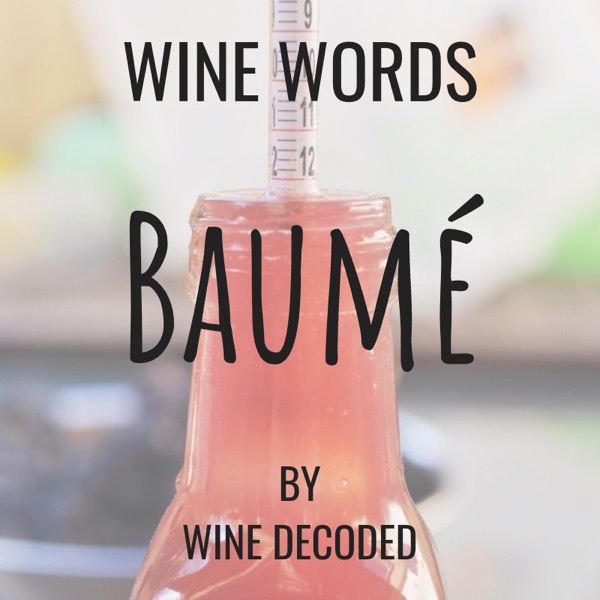
Baumé [Bé]


Baumé & Brix are unit of measurement for the amount of sugar in grape juice and fermenting wine.

« Back to Wine Words Index

Baumé, pronounced Boh-May, & Brix are units of measurement for the amount of sugar in grape juice and fermenting wine.

1°Bé = 1.8°Brix = 18 grams per litre sugar.

Depending on the efficiency of the yeast in converting sugar to alcohol 1°Bé will produce 1-1.1% alcohol. So fruit picked at 12°Bé will result in a wine with 12-13.5% Alcohol.

We measure Baumé & Brix using hydrometers that float in juice and wine.

On the left is a hydrometer and thermometer just about to measure the Baumé and temperature of the fermenting wine. On the right a hydrometer measuring the Baumé of a juice sample to check the sugar levels before picking. You can see it is at about 12.4°Bé. Enough sugar to make a wine with somewhere between 12.4-13.5% alcohol.

The Mega Technical Bit

The reading needs to be adjusted for the temperature of the liquid. We’re measuring the density of the liquid which will be more dense at lower temperatures and less dense at higher temperatures. As fermentation progresses alcohol production reduces the density of the liquid. By the end of fermentation, a hydrometer will need to read negative to indicate all the sugar has been consumed.

A hydrometer can not accurately measure very low levels of sugar. Other tests have to be used to determine precisely how many grams per litre of sugar remain in the wine.
 

Synonyms:
Brix
« Back to Wine Words Index

Feeling Thirsty?

A.J.Adam Dhroner Hofberg Spätlese Riesling 2021
95 MFW

A.J.Adam Dhroner Hofberg Spätlese Riesling 2021

Riesling | Mosel-Saar-Ruwer, Germany

AP: 15 22. The 2021er Hofberg Spätlese, as it is referred to on the consumer label, was made from fruit harvested at 86° Oechsle in the backside of the main hill of the vineyard and was fermented down to fruity-styled levels of residual sugar (62 g/l). It offers a beautifully aromatic and complex nose of vineyard peach, fresh pineapple, smoke, minty herbs, fine spices (ginger), and almond. The wine proves gorgeously playful on the palate where some creamy elements give gradually way to candied
$105
$100ea in any 3+
$95ea in any 6+
Lamy’s tiny Clos du Meix parcel is just 0.7 hectares. It was planted between 1985 and 1995 at the western fringe of the village, at 300 metres. The sheltered location (just below Derrière chez Edouard), heavier clays and the fact that it is fully enclosed by a wall (and therefore protected from the cold, northern winds) always give excellent texture to go with this wine’s intense minerality. Although the topsoil is rich in clay, there is only 30cm before the vine roots hit hard limestone
$348
$333ea in any 3+
$318ea in any 6+

Valentini Trebbiano d’Abruzzo 2015

Trebbiano | Italy, Abruzzo

Good bright yellow. The pure, complex nose suggests lime, yellow apple and botanical herbs. Then very precise, intense and penetrating, if still youthfully unevolved, conveying a powerful, three-dimensional impression of extract and a deep, textured, multilayered mouthfeel. The wine closes very long and juicy, with herbal and saline elements that titillate the taste buds. Another outstanding wine from Valentini, who never misses a beat with his Trebbiano d’Abruzzo.Ian d'Agata, Vinous 93+ P
$550
$530ea in any 3+
$510ea in any 6+

Willi Schaefer Graacher Domprobst Auslese #11 2019

Riesling | Mosel-Saar-Ruwer, Germany

Initially reductive notes of smoke and aniseed herbs, then pear, honeyed yellow peach, spices, fresh herbs, violet and bergamot join the party. Develops gorgeous playful sweetness on the light-footed and delicately zesty palate, and leaves gorgeously direct flavours of fruit basket and candied grapefruit in the finish. This joyful and fruit-driven auslese will be irresistible at maturity. Mosel Fine Wines 95 Points
$207
$197ea in any 3+
$187ea in any 6+