Baumé [Bé]


Baumé & Brix are unit of measurement for the amount of sugar in grape juice and fermenting wine.

« Back to Wine Words Index

Baumé, pronounced Boh-May, & Brix are units of measurement for the amount of sugar in grape juice and fermenting wine.

1°Bé = 1.8°Brix = 18 grams per litre sugar.

Depending on the efficiency of the yeast in converting sugar to alcohol 1°Bé will produce 1-1.1% alcohol. So fruit picked at 12°Bé will result in a wine with 12-13.5% Alcohol.

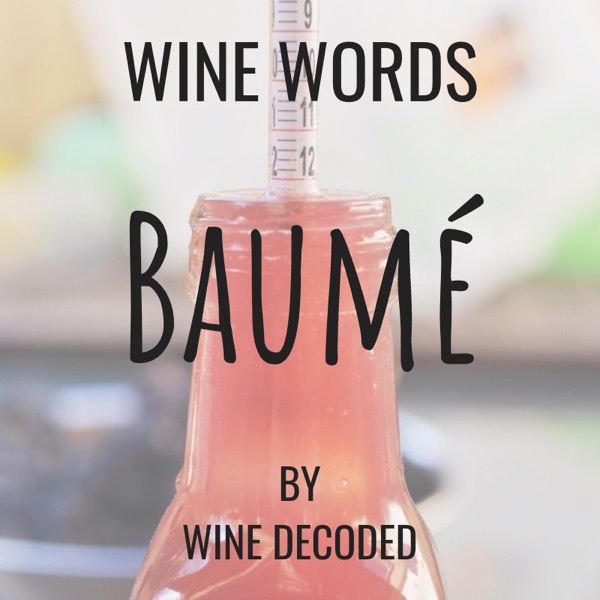
We measure Baumé & Brix using hydrometers that float in juice and wine.

On the left is a hydrometer and thermometer just about to measure the Baumé and temperature of the fermenting wine. On the right a hydrometer measuring the Baumé of a juice sample to check the sugar levels before picking. You can see it is at about 12.4°Bé. Enough sugar to make a wine with somewhere between 12.4-13.5% alcohol.

The Mega Technical Bit

The reading needs to be adjusted for the temperature of the liquid. We’re measuring the density of the liquid which will be more dense at lower temperatures and less dense at higher temperatures. As fermentation progresses alcohol production reduces the density of the liquid. By the end of fermentation, a hydrometer will need to read negative to indicate all the sugar has been consumed.

A hydrometer can not accurately measure very low levels of sugar. Other tests have to be used to determine precisely how many grams per litre of sugar remain in the wine.
 

Synonyms:
Brix
« Back to Wine Words Index

Feeling Thirsty?

Red Blend

Giuseppe Quintarelli ‘Ca del Merlo’ 2016

The Valpolicella Classico Superiore Ca’ del Merlot is distinctly savory in the glass, with a thrust of wild herbs that evolves into fresh picked strawberries and wet stone. This is a model of purity and balance, with brilliant acidity that propels its crisp wild berry fruits as violet inner florals collect toward the close. Further elevated by a hint of confectionary spice, it tapers off remarkably fresh and vivid, with a blueberry tinge and dusty tannins that promise a lovely evolution. This

Vintage 2016
$294
$284ea in any 3+
$274ea in any 6+

Pecorino from Abruzzo, Italy

Ciavolich Pecorino ‘Fosso Cancelli’ Colline Pescaresi 2021

Fascinating Pecorini. A little skin contact yields a lick of burnt match that sits nicely as a complexing line over complex fruits with citrus oils. Nicely developed its an example of a textural Pecorino. That will please those after a less funky pecorino than Pepe’s and a much more textural complete it cuts a fine balance between the full blown styles and the fresh precise ones. A lot to love here. Will hand a huge diversity of foods.Paul Kaan, Wine Decoded Feb 2026The 2021 Pecori

Vintage 2021
$96
$92ea in any 3+
$88ea in any 6+

Pinot Noir from Chambolle-Musigny, Côte-de-Nuits

Domaine Ghislaine Barthod Chambolle-Musigny 2018

A whiff of reduction is just enough to shave the top notes from the otherwise attractive and ripe aromas of black cherry, spice and raspberry. The sleek, rich and vibrant flavors possess very good volume, indeed they are attractively succulent, all wrapped in a raspy and compact finish where a hint of wood arises.Allen Meadows, Burghound 88-90 Points The 2018 Chambolle-Musigny Village is showing beautifully, offering up aromas of cherries, raspberries and blood orange mingled with r

Vintage 2018
$290
$280ea in any 3+
$270ea in any 6+

Nebbiolo from Barbaresco, Piedmont

Produttori del Barbaresco Riserva ‘Ovello’ 2017

One of the bigger productions (with 17,744 bottles) in the Produttori del Barbaresco's portfolio is the 2017 Barbaresco Riserva Ovello. All of the Riservas in this vintage are characterized by especially exuberant and bold aromas, and this bottle is a prime example. Cassis, wild cherry, tobacco, rusty nail and licorice build intensity. The wine is tapered and silky in texture, but it also offers a good amount of power (and 15% alcohol) to carry it through the aging process.Monica Larner, The

Vintage 2017
$230
$220ea in any 3+
$210ea in any 6+