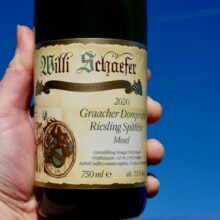
Willi Schaefer Graacher Domprobst Riesling Spätlese #10 2023

Product information

Willi Schaefer Graacher Domprobst Riesling Spätlese #10 2023

Riesling from Mosel-Saar-Ruwer, Mosel, Germany

$141

$136ea in any 3+
$131ea in any 6+
Alc: 7.5%
Closure: Cork

Description

The 2023 Graacher Domprobst Riesling Spätlese #10 is very clear, fresh and precise on the spring-like nose. Flavors of crushed rocks, salts and lime zest drag into the glass, and the wine, once on the palate, is full of energy and very fine raisin, even blueberry and wax leaf aromas. This beautifully balanced and silky Domprobst Spätlese is full of finesse and reveals a playful, irresistible character with perfectly ripe fruit that is like an idea of fruit rather than material on the palate. This is a subtle stunner and one day will probably be even finer than the gorgeous Himmelreich Spätlese. 7.5% stated alcohol. Natural cork. Tasted at the domaine in August 2024. Drink: 2034 – 2070

Stephen Reinhardt, The Wine Advocate 98 Points


AP: 10 24. The 2023er Graacher Domprobst Riesling Spätlese #10 (the reference to #10 is written in small on the bottom right of the label) is a sweet wine made from harvested mainly in the Fergert. The nose proves quite appealing and refreshing as delicate scents of candied citrusy fruits and fresh mint, anise, tangerine, thyme, and candy floss. The wine is very playful and juicy on the palate, where some ripe yellow fruits give a creamy and delicately smooth side to the whole. The finish is very long and precise, as some zesty elements give freshness and purity. This is a drinking Spätlese, with depth and complexity. 2031-2053

Mosel Fine Wines 94 Points

AK 96

Check out all of the wines by Willi Schaefer

Why is this Wine so Yummy?

“It is important to us that our Rieslings are light, playful and yet very strong in character. They should reflect their origins. The DOMPROBST is rather spicy and wild and the HIMMELREICH is more fruity and charming. Our wines should remain appetizing and never be sticky-sweet. We also prefer our dry Rieslings to be light in alcohol. The tremendous minerality gives the wines tension and flatters the fruit sweetness as a counterpoint. We don’t like to talk about analyses. One should taste the wines and form one’s own opinion. For us, perfect Riesling is something magical and refined, perhaps something like a dream. Light and yet tasty, long-lasting, playful and with incredible ripening potential.”
Christoph Schaefer

About Willi Schaefer

An ancestor of the Schaefer family was mentioned in a vineyard donation already in 1121. In addition, records show that the Schaefers have been cultivating vineyards since 1590. Johann Schaefer (1809–1878) married Anna Catharina von Meyerbach (1808–1878) in 1935. Her noble coat of arms is still on today’s label.

The estate is all of 4.2 hectares with no desire to grow. Since 2015, Christoph Schaefer and his wife Andrea run the family winery in Graach, the pair met while studying oenology at Geisenheim. Their winemaking philosophy is not much different than that of Christoph’s father or grandfather.

I learned a lot from my father. I think he also gave me the peace and serenity that allows me to concentrate completely on the wine when it matters most. I also had a wonderful grandfather, who achieved a lot in the post-war period and saved every last cent for today’s winery building. He and his wife were real “creators”.

Christoph Schaefer

In the Vineyard

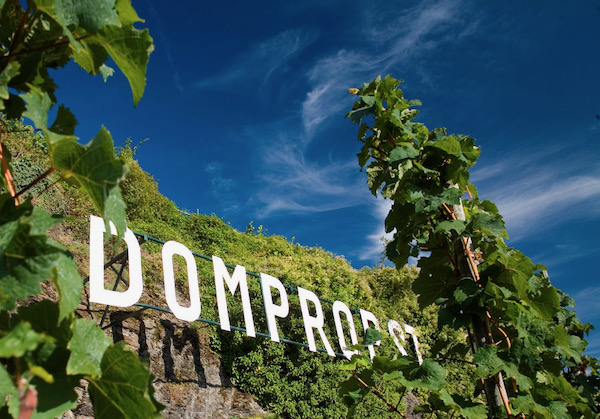
Although Graach is just a stone’s throw away from Bernkastel, the clocks seem to tick differently here: Graach is contemplative, placid, and is located at the foot of the imposing steep slopes, which is only separated from the Mosel River by the riparian plains. With these vineyards, we have a treasure that has no equal. In a south-to-southwest exposition, the grapes grown on these steep slopes have sun throughout the day. The deep, weathered clayey slate soil, together with the rather cool climate of the Mosel, and the perfect sunlight, is a paradise for Riesling. Numerous water veins in the hillside guarantee an optimal water supply. No wonder that everything is still planted seamlessly here.

The Romans already knew the benefits of Graach’s sites and cultivated vines here. In the Prussian classification of the Mosel vineyards from 1816 to 1832, Graach’s vineyards had the highest ratings.

As one can see by the names of the sites even today, the Catholic Church was the primary owner of the Graacher vineyards till secularization in 1803.

Compared to the wines just slightly northwest in Zeltingen, the wines from Graach show cooler green and white tones rather Wehlen and Zeltingen’s more orange and red flavors. These wines perfectly reflect this unique terroir and show the distinct differences between these two sites right next to each other. Domprobst is more mineral, smokier, shadowy, and takes longer to emerge while Himmelreich is buoyant, more floral, lighter in texture, and is open from day one.

In the Winery

To tap the potential of each individual site, we rely on our sense of taste and our gut feeling. Before the harvest, we go through the vineyards and sample the grapes in every single plot. What counts is the taste of the grapes.

Therefore, we don’t stubbornly rely on measurable data, such as the amount of Oechsle or acidity. Only when we’re completely convinced that ‘it’s time’, do we begin our selective harvest. If you’re personally satisfied with the taste of the grapes, then the wine will taste good, too. We rarely look at the analysis.

The same goes for the must. During fermentation, we sample very often to see when the balance between sweetness and acidity, plus structure, are perfect. Here, also, we trust our feeling and not numerical values.
The fermentation takes place with natural yeasts from the vineyard mainly in old 1,000-liter Fuder casks. In the cellar, we try to intervene as little as possible and accompany rather what nature has provided us. We give the Rieslings the time in the cellar that they need. Therefore, a long lees contact and a late bottling are self-evident.

In the cellar we simply try to preserve the quality that nature has given us. If we have suitable grapes for a dry Riesling, then we also ferment dry. But if I am convinced that the must is better suited for a semi-sweet wine, the fermentation is interrupted as soon as the balance is perfect. We ferment with wild yeasts in classic Fuder barrels. Depending on the vintage, it can occur that there is no dry wine or only Spätlese and Auslese wines. That is nature.

Christoph Schaefer

The 2023 Vintage at Willi Schaefer

In the end, Christoph Schaefer was more than satisfied with the 2023 vintage, which he didn’t see coming so well, describing it as “a blend of tension, elegance and intensity,” as the family worked to bring it home in the best possible way.

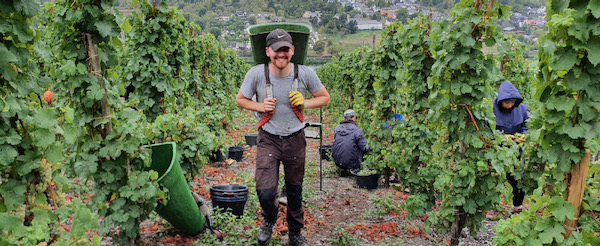
“The vintage was not easy,” Christoph said at our tasting at the winery on a Sunday morning in early August. The growing season started late, with plenty of rain in the winter and spring. Then it got warm for a long time and even very warm, and the vines developed quickly. However, rain set in again at the end of July and continued into the fall. Added to this were the still-high temperatures in September, which led to the risk of rot. “The harvest was correspondingly exhausting. We started early to take the pressure off. But we had to work absolutely cleanly from the very beginning,” emphasized Christoph, who pursues a very clear, elegant and inspiring style. Starting the harvest early on September 15 was therefore the right choice. “We needed the time, also because of the elaborate selection in the vineyard,” he said. Here, the Schaefers have developed a veritable routine in recent years and are mercilessly uncompromising when it comes to negative selection. It took them over four weeks to harvest the 4.5 hectares of vines.

The result is another great series of Rieslings from the three grands crus: Graacher Domprobst, Himmelreich and Wehlener Sonnenuhr. The grape quality was at least at the Kabinett level, so it was not possible to downgrade to local wines. So, there are four Kabinett wines: three from each vineyard and a fourth again from the Domprobst. This noble, incredibly finessed and rich Kabinett (AP#1) is already the fourth consecutive vintage to be selected for the auction, whereas previously only Spätlese and Auslese vintages were selected. However, the last real Aulsese or botrytis vintage was in fact 2019. “After that, it was really only Kabinett vintages that followed,” said Christoph, who still found enough Spätlese grapes in 2023 (three in the Domprobst alone!), but for whom Auslese wines have become a rarity. “Because things don’t always get better if you wait,” as he also learned last fall. “Good Kabinett grapes quickly turn into rotten grapes that we didn’t want to use.”

For example, there were only 200 liters of raisined grapes from the 2023 vintage from the Domprobst (this precious Riesling #14 was reserved exclusively for long-standing regular customers), while there was only one glass balloon of Auslese from the Wehlener Sonnenuhr. The 55 liters of an almost perfect Riesling, filled as a “long gold capsule” (Lange Goldkapsel), will be auctioned in November.

However, the wine that you should definitely try to buy here – next to the regular Kabinett Rieslings – is the 2023 Graacher Himmelreich Spätlese, which is almost too good to be true. The fact that you don’t have to go to the auction for this quality, but to your trusted dealer, makes it Willi Schaefer’s 2023 Riesling of the Year.

Weingut Willi Schaefer + Stpehen Reinhardt August 2024

Where in the World is Willi Schaefer?

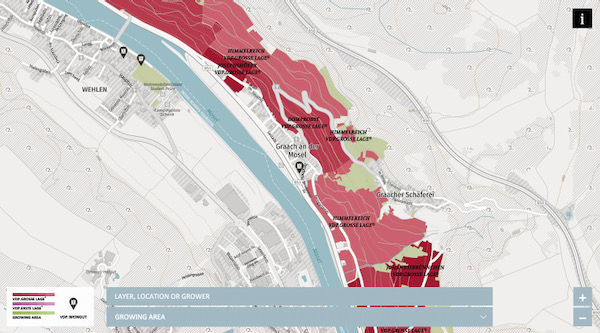
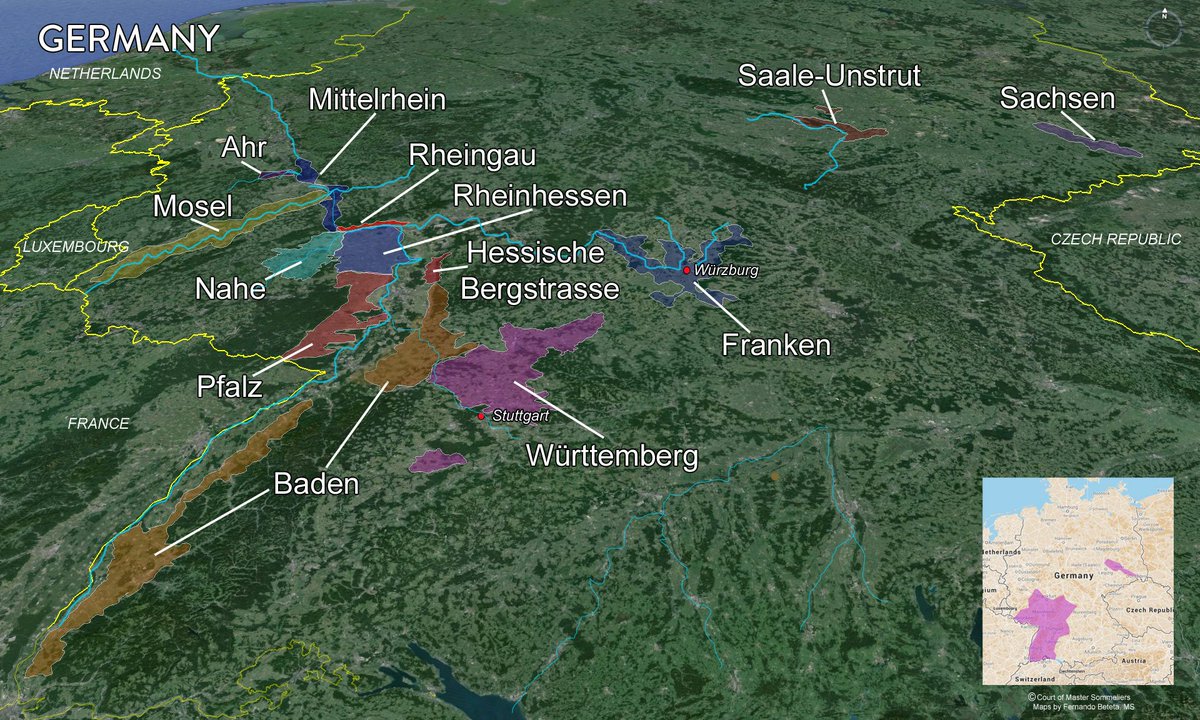
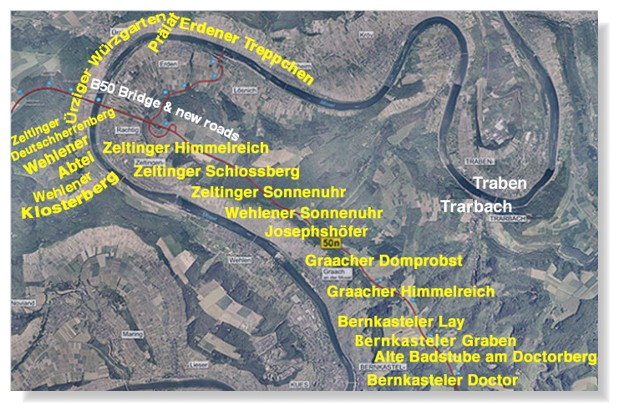
Willi Schaefer is in the middle-Mosel based in the township of Graach. Their most important vineyards are Graacher Domprost, Graacher Himmelreich, and Wehlener Sonnenuhr.

The German VDP has an excellent interactive map covering the wine growing regions of Germany. Clink on the Map to go to the live version.

Map by Fernando Beteta, MS @fernandobeteta on Twitter
94 Points

AP: 10 24. The 2023er Graacher Domprobst Riesling Spätlese #10 (the reference to #10 is written in small on the bottom right of the label) is a sweet wine made from harvested mainly in the Fergert. The nose proves quite appealing and refreshing as delicate scents of candied citrusy fruits and fresh mint, anise, tangerine, thyme, and candy floss. The wine is very playful and juicy on the palate, where some ripe yellow fruits give a creamy and delicately smooth side to the whole. The finish is very long and precise, as some zesty elements give freshness and purity. This is a drinking Spätlese, with depth and complexity. 2031-2053

Mosel Fine WInes

98 Points

The 2023 Graacher Domprobst Riesling Spätlese #10 is very clear, fresh and precise on the spring-like nose. Flavors of crushed rocks, salts and lime zest drag into the glass, and the wine, once on the palate, is full of energy and very fine raisin, even blueberry and wax leaf aromas. This beautifully balanced and silky Domprobst Spätlese is full of finesse and reveals a playful, irresistible character with perfectly ripe fruit that is like an idea of fruit rather than material on the palate. This is a subtle stunner and one day will probably be even finer than the gorgeous Himmelreich Spätlese. 7.5% stated alcohol. Natural cork. Tasted at the domaine in August 2024. Drink: 2034 - 2070

Stephen Reinhardt, The Wine Advocate

Where in the world does the magic happen?

Weingut Willi Schaefer, Hauptstraße, Graach an der Mosel, Germany

Mosel
Mosel-Saar-Ruwer
Germany