Southern Rhône
Châteauneuf du Pape
At the time, wine-growing around the town of Avignon was anything but illustrious. While the Avignon Papacy did much to advance the reputation of Burgundy wines, they were also promoting viticulture of the surrounding area, more specifically the area 5–10 km (3–6 mi) north of Avignon close to the banks of the Rhône. Prior to the Avignon Papacy, viticulture of that area had been initiated and maintained by the Bishops of Avignon, largely for local consumption.
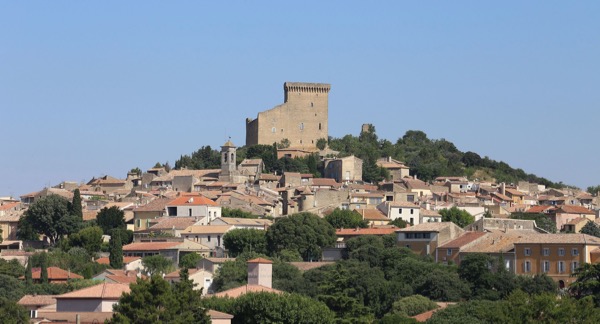
Clement V was succeeded by John XXII who, as well as Burgundy wine, regularly drank the wines from the vineyards to the north and did much to improve viticultural practices there. Under John XXII, the wines of this area came to be known as “Vin du Pape”, this term later to become Châteauneuf-du-Pape. John XXII is also responsible for erecting the famous castle which stands as a symbol for the appellation.
The Grape Varieties of Châteauneuf
Châteauneuf-du-Pape is traditionally cited as allowing thirteen grape varieties to be used, but the 2009 version of the AOC rules in fact list eighteen varieties, since blanc (white), rose (pink) and noir (black) versions of some grapes are now explicitly listed as separate varieties. Also in the previous version of the appellation rules, Grenache and Picpoul were associated with different pruning regulations in their noir and blanc versions, bringing the number of varieties previously mentioned from thirteen to fifteen.
Red varieties allowed are Cinsaut, Counoise, Grenache noir, Mourvèdre, Muscardin, Piquepoul noir, Syrah, Terret noir, and Vaccarèse (Brun Argenté). White and pink varieties are Bourboulenc, Clairette blanche, Clairette rose, Grenache blanc, Grenache gris, Picardan, Piquepoul blanc, Piquepoul gris, and Roussanne. (The varieties not specifically mentioned before 2009 are Clairette rose, Grenache gris and Piquepoul gris.)
Both red and white varieties are allowed in both red and white Châteauneuf-du-Pape. There are no restrictions as to the proportion of grape varieties to be used, and unlike the case with other appellations, the allowed grape varieties are not differentiated into principal varieties and accessory varieties.
Thus, it is theoretically possible to produce varietal Châteauneuf-du-Pape from any of the eighteen allowed varieties. In reality, most Châteauneuf-du-Pape wines are blends dominated by Grenache. Only one of every 16 bottles produced in the region is white wine.
