Tartrate


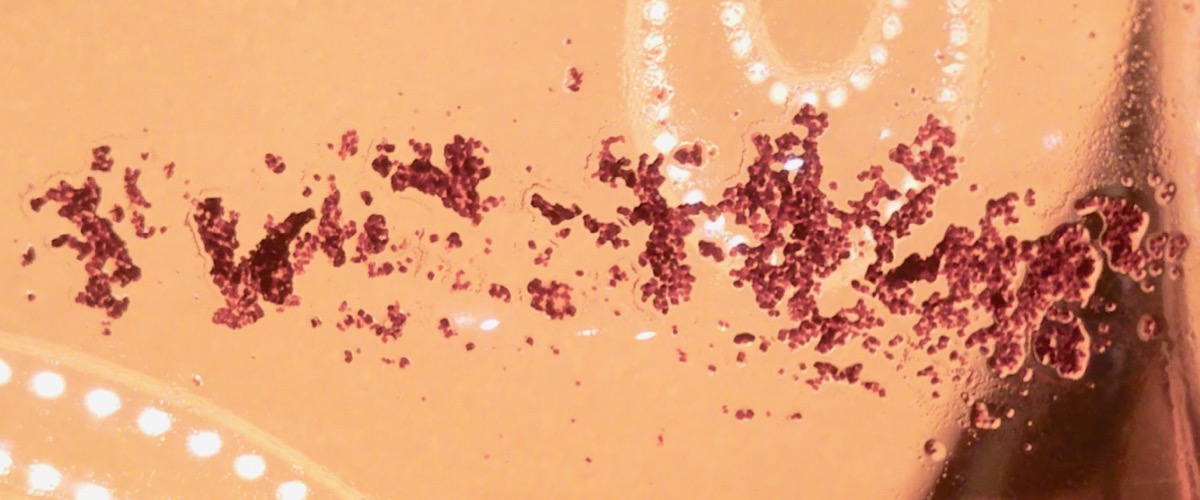
Tartrate is a crystal formed when Tartaric Acid reacts with Potassium as the temperature of a wine cools.

Also known as Wine Diamonds, Tartrate is harmless, settles quickly to the bottom of the bottle and can be removed by simply decanting.

« Back to Wine Words Index

Tartrate is a crystal formed when Tartaric Acid reacts with Potassium as the temperature of a wine cools.

Also known as Wine Diamonds, Tartrate is harmless, settles quickly to the bottom of the bottle and can be removed by simply decanting.

Tartrate in it’s pure form is also known as Cream of Tartar. It is used in baking, and, is an ingredient in baking powder. You guessed it, they source the tartrate from the wine industry!

Both Tartaric Acid and Potassium are naturally present in grapes. The solubility of Tartaric Acid and Potassium is dependant on temperature, alcohol concentration, pH and a number of other factors.

Commercial wines are typically made cold stable by chilling the wine down to close to 0ºC encourage tartrate crystallisation, the crystals are then removed by filtering or natural sedimentation followed by racking the wine. There are a number of other methods to achieve this result.

It’s common to see Tartrate in wines that have high acidity, Sauternes, German & Alsatian Riesling, Nebbiolo and many others.

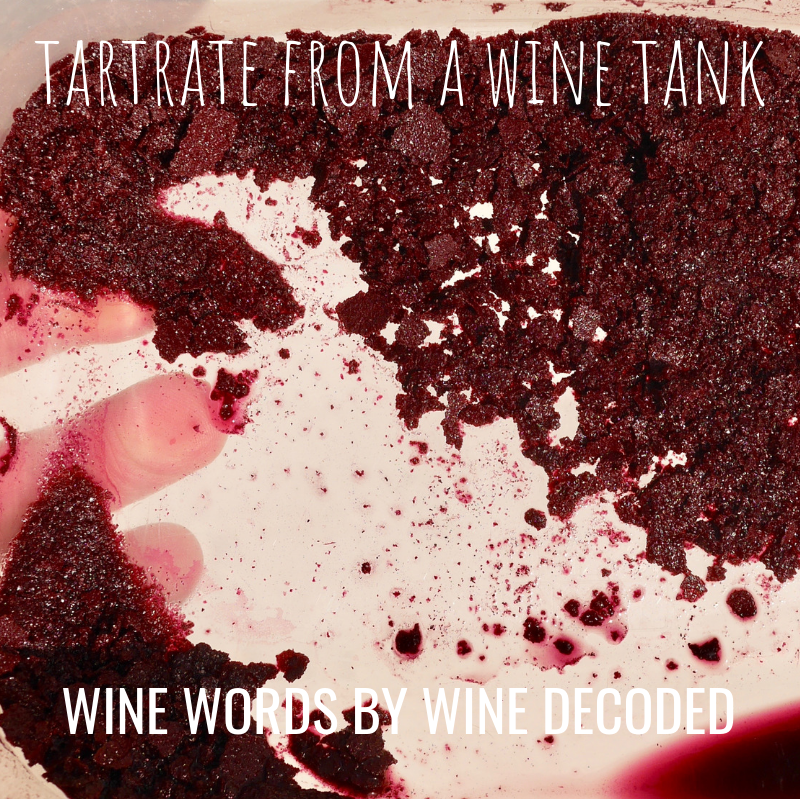
Below is a picture of tartrate from the bottom of the tank when we racked the 2017 Shiraz after it’s second winter cooling in 2018. You can see it’s picked up a bit of colour too.
The cork of a 30 year old Botrytis Riesling with tartrate crystals on it.

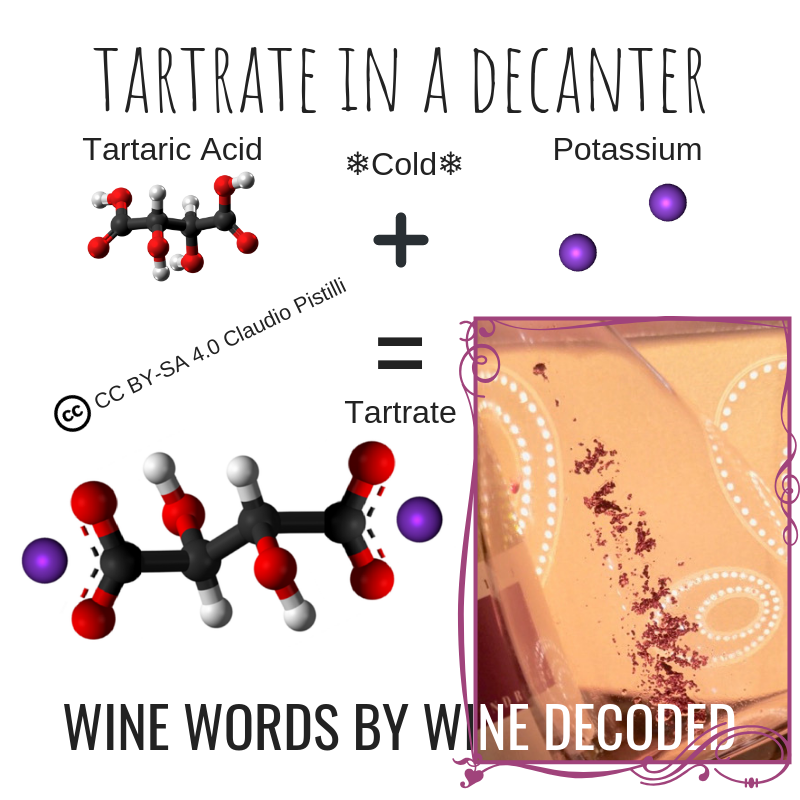
The Chemistry

The decanter after a 2013 Sandrone Barbera was polished off. Barbera has very high natural acidity and is prone to forming tartrate in the bottle.
Synonyms:
Wine Diamonds
« Back to Wine Words Index

Feeling Thirsty?

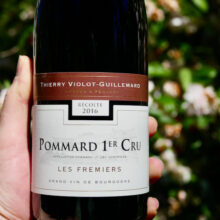
Fascinating drinking here. More down the strawberry line. With excellent harmony. This is divine, violets and underlying savoury notes. Another excercise in textural difference. Arvelet so even fine and plush, derrière building in structure, Fremier super high quality tannins with a very slight mid-palate prominence and wonderful length of tannin.Drinking these wines side by side is a demonstration in the diversity of Pommard, a celebration of the differences between vineyards.
$242
$232ea in any 3+
$222ea in any 6+
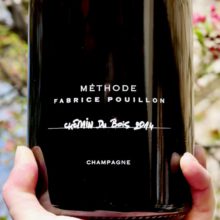
R.Pouillon 'Chemins du Bois' Grand Cru MAGNUM 2014
The Fabrice Session 🎧 & 🎥 Inside!

R.Pouillon ‘Chemins du Bois’ Grand Cru MAGNUM 2014

Pinot Noir | Mareuil-sur-Aÿ, France

“This is our foundation-wine as so many things started with this parcel. First of all, because it’s one of Champagne’s oldest massal selections. Afterwards and most especially because it gave me the idea for my Méthode Fabrice Pouillon used to make all my wines.” 
$885
$865ea in any 3+
$845ea in any 6+

Selbach Oster Wehlener Sonnenuhr Spätlese* 2019

Riesling | Mosel-Saar-Ruwer, Germany

"The 2019er Wehlener Sonnenuhr Riesling Spätlese * was made from fruit harvested at 100° Oechsle and fermented down to sweet levels of residual sugar (81 g/l). It exhibits some smoky, minty, and ripe scents of pear, quince, almond cream, lavender, pineapple, and smoke on the nose. The wine reveals a more exotic and animating side on the delicate and subtly smooth palate, and leaves one with a feeling of presence and intensity, but all focused and chiseled in the long finish. 2026-2039."Jea
$88
$84ea in any 3+
$80ea in any 6+
André Clouet Cuvee 1911
Such depth!

André Clouet Cuvee 1911

Pinot Noir | Champagne, Bouzy

Fermented in Sauternes barrels, this baby has an extra dimension of pleasure woven in! 100% pinot noir from Clouet's 10 best plots, dubbed by Jean-Francois 'the golden square of Bouzy' 50% fermented in Sauternes barriques from Doisy-Daëne, 50% solera of reserve wines; full malolactic fermentation, a symbolic production of just 1911 bottles. All this combined with a slightly lower pressure gives the wine a lucious mouthfeel. It just draws you in!Incredible layered and complex, playing oxida
$189
$182ea in any 3+
$175ea in any 6+