Tartrate


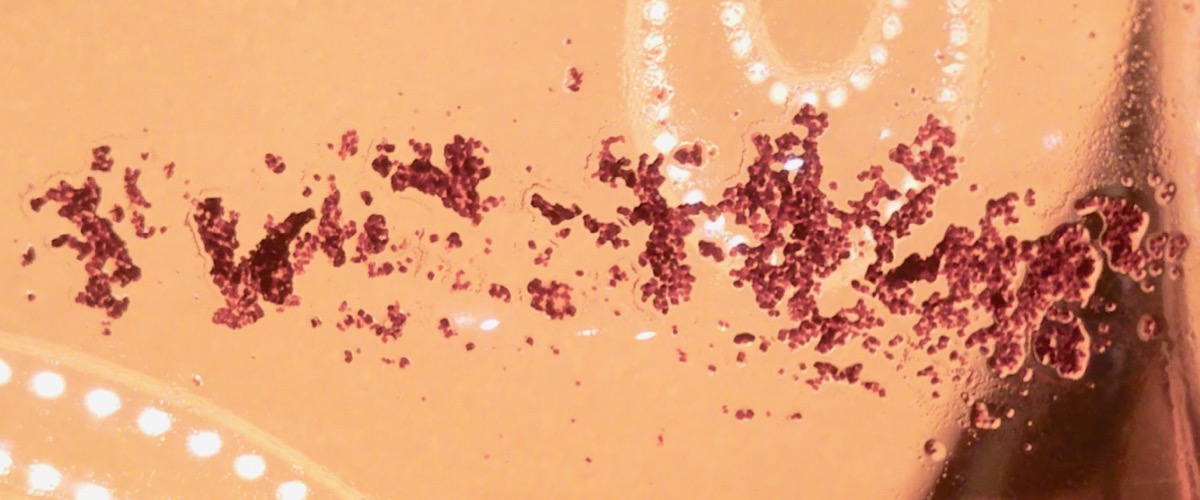
Tartrate is a crystal formed when Tartaric Acid reacts with Potassium as the temperature of a wine cools.

Also known as Wine Diamonds, Tartrate is harmless, settles quickly to the bottom of the bottle and can be removed by simply decanting.

« Back to Wine Words Index

Tartrate is a crystal formed when Tartaric Acid reacts with Potassium as the temperature of a wine cools.

Also known as Wine Diamonds, Tartrate is harmless, settles quickly to the bottom of the bottle and can be removed by simply decanting.

Tartrate in it’s pure form is also known as Cream of Tartar. It is used in baking, and, is an ingredient in baking powder. You guessed it, they source the tartrate from the wine industry!

Both Tartaric Acid and Potassium are naturally present in grapes. The solubility of Tartaric Acid and Potassium is dependant on temperature, alcohol concentration, pH and a number of other factors.

Commercial wines are typically made cold stable by chilling the wine down to close to 0ºC encourage tartrate crystallisation, the crystals are then removed by filtering or natural sedimentation followed by racking the wine. There are a number of other methods to achieve this result.

It’s common to see Tartrate in wines that have high acidity, Sauternes, German & Alsatian Riesling, Nebbiolo and many others.

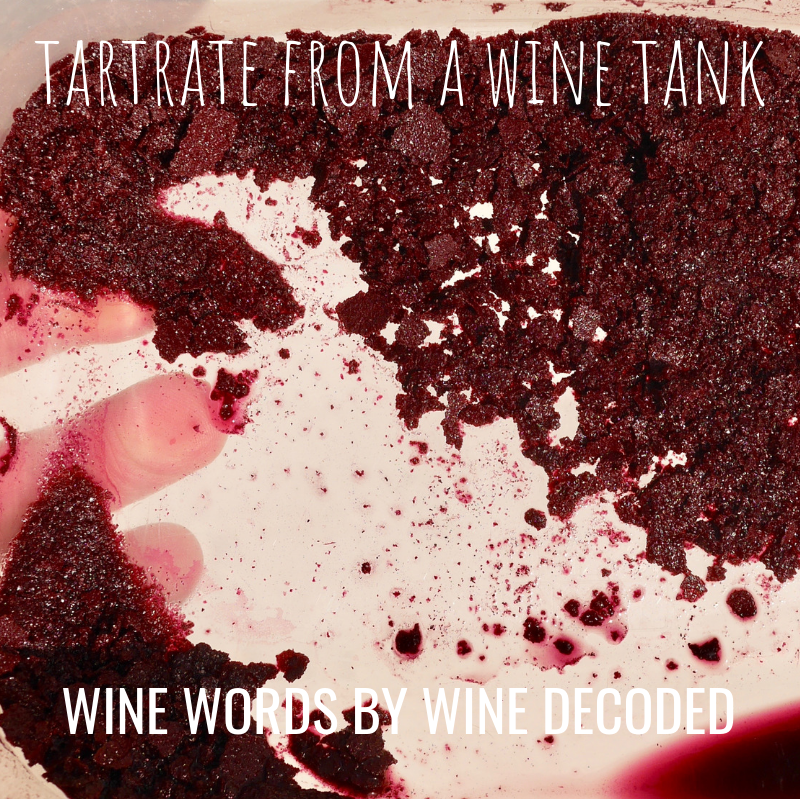
Below is a picture of tartrate from the bottom of the tank when we racked the 2017 Shiraz after it’s second winter cooling in 2018. You can see it’s picked up a bit of colour too.
The cork of a 30 year old Botrytis Riesling with tartrate crystals on it.

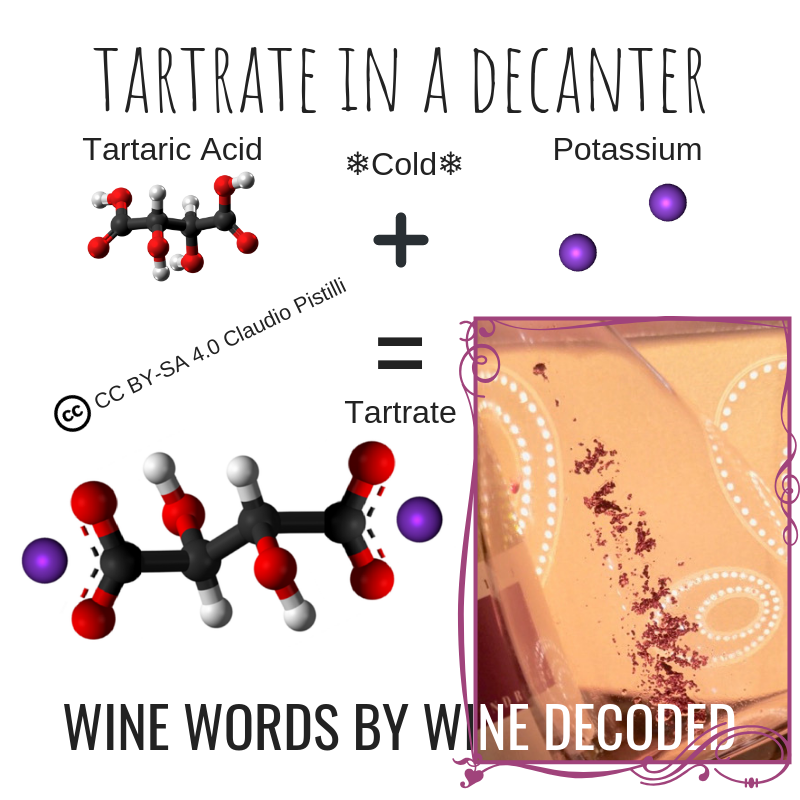
The Chemistry

The decanter after a 2013 Sandrone Barbera was polished off. Barbera has very high natural acidity and is prone to forming tartrate in the bottle.
Synonyms:
Wine Diamonds
« Back to Wine Words Index

Feeling Thirsty?

A special release from the cellars of the Domaine!"A highly spiced and very Vosne nose offers up notably ripe aromas of cassis and black raspberry liqueur-like scents that display a subtle note of mocha. The very seductive, concentrated, suave and mouth coating flavors possess both excellent volume and solid mid-palate concentration before terminating in a balanced and lingering finale. This is certainly impressive in its fashion but for my taste it lacks the same vibrancy and delineation as
$564
$544ea in any 3+
$524ea in any 6+

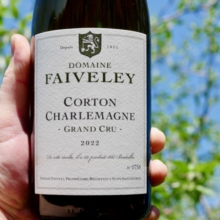
Domaine Faiveley Corton Charlemagne Grand Cru 2022

Chardonnay | France, Aloxe-Corton

A more restrained nose only grudgingly displays its aromas of Granny Smith apples, anise, mineral reduction and more discreet floral elements. The racy and tautly muscular largebodied flavors possess a really lovely texture thanks to the abundant sappy dry extract that also serves to buffer the firm acidity shaping the beautifully long, stony and impeccably well-balanced finale. This also needs to develop better depth but given how tightly wound it is, and given the evident quality of the underl

Dhillon by Bindi Glenhope Chardonnay 2023

Chardonnay | Victoria, Australia

This is the second wine we have made from this nearly 30 year old Macedon Ranges vineyard. The Glenhope vineyard is planted at 450m above sea level on the granite soil at the northern end of the region. The wine is made in the same way we make Bindi Chardonnays; destemmed berries go into the press and the juice is taken straight from the tray into the barrels, around 30% of which are new small French oak. The fermentation occurs without yeast addition and the wine remains on all lees for ten mon
$46
$43ea in any 3+
$40ea in any 6+
Containing over 700 pages of in-depth writing, maps that are almost alarming in their detail, and incorporating newly commissioned and (literally) ground-breaking research into Bordeaux’s terroir, Janes Anson’s work is, by a margin, the most up-to-date and scientifically informed book in the Bordeaux canon. Indeed, with the bar set so high, this is a book unlikely to be surpassed in our lifetime (unless there is a second edition)!Anson has lived and worked in Bordeaux for almost 20 years