Tartrate


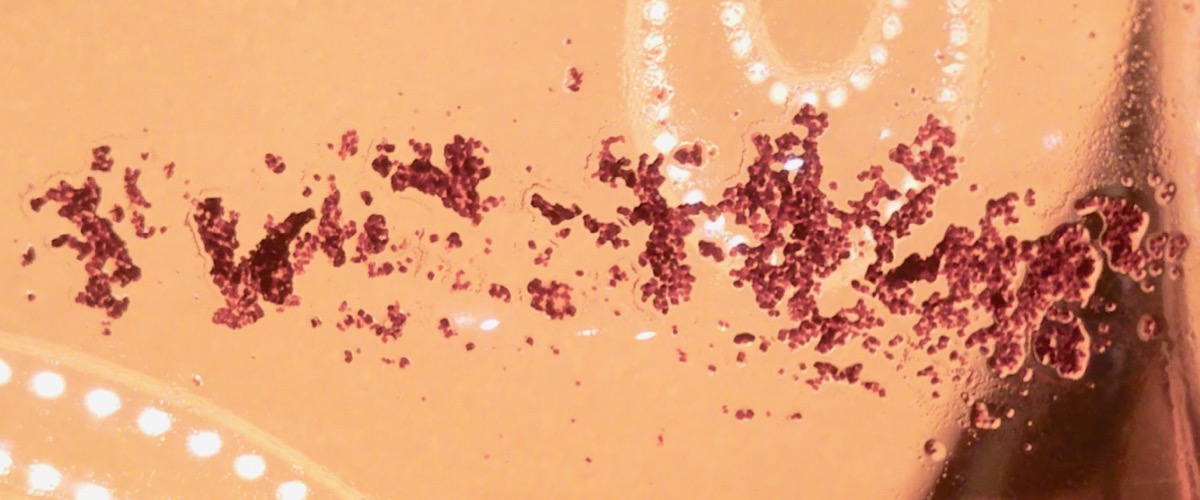
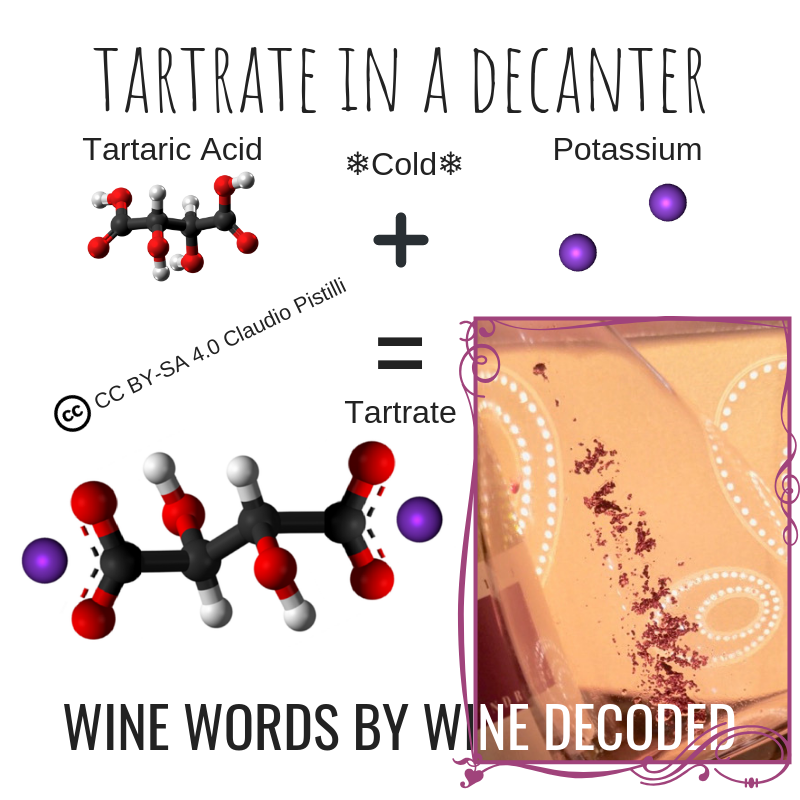
Tartrate is a crystal formed when Tartaric Acid reacts with Potassium as the temperature of a wine cools.

Also known as Wine Diamonds, Tartrate is harmless, settles quickly to the bottom of the bottle and can be removed by simply decanting.

« Back to Wine Words Index

Tartrate is a crystal formed when Tartaric Acid reacts with Potassium as the temperature of a wine cools.

Also known as Wine Diamonds, Tartrate is harmless, settles quickly to the bottom of the bottle and can be removed by simply decanting.

Tartrate in it’s pure form is also known as Cream of Tartar. It is used in baking, and, is an ingredient in baking powder. You guessed it, they source the tartrate from the wine industry!

Both Tartaric Acid and Potassium are naturally present in grapes. The solubility of Tartaric Acid and Potassium is dependant on temperature, alcohol concentration, pH and a number of other factors.

Commercial wines are typically made cold stable by chilling the wine down to close to 0ºC encourage tartrate crystallisation, the crystals are then removed by filtering or natural sedimentation followed by racking the wine. There are a number of other methods to achieve this result.

It’s common to see Tartrate in wines that have high acidity, Sauternes, German & Alsatian Riesling, Nebbiolo and many others.

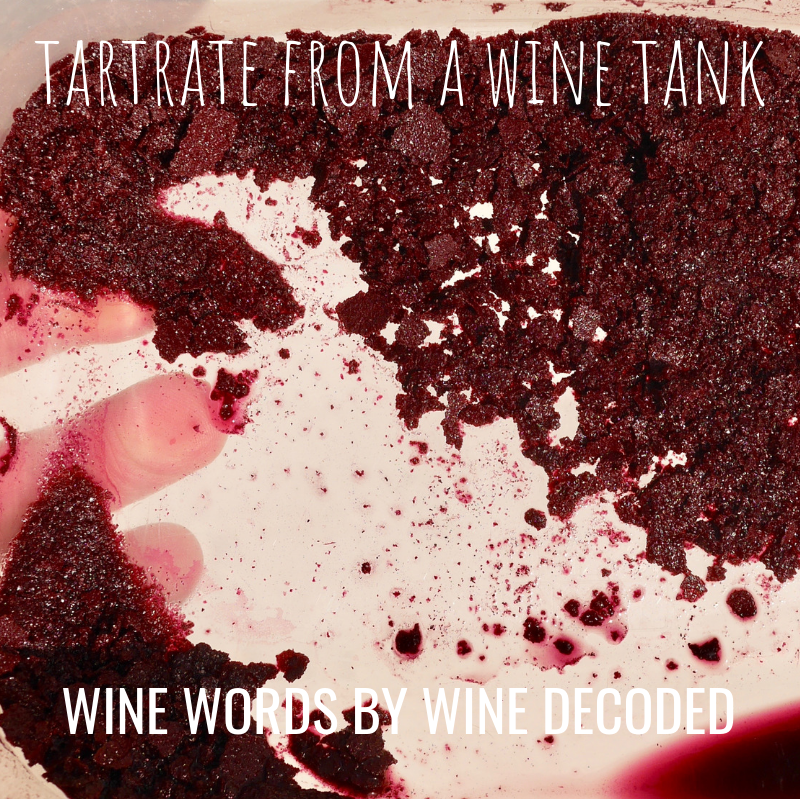
Below is a picture of tartrate from the bottom of the tank when we racked the 2017 Shiraz after it’s second winter cooling in 2018. You can see it’s picked up a bit of colour too.
The cork of a 30 year old Botrytis Riesling with tartrate crystals on it.

The Chemistry

The decanter after a 2013 Sandrone Barbera was polished off. Barbera has very high natural acidity and is prone to forming tartrate in the bottle.

Synonyms:
Wine Diamonds
« Back to Wine Words Index

Feeling Thirsty?

Nice little bit of funk and complexity with citrus oils lifting from the glass. The step up in quality of fruit from the Passobianco is significant and justifies the step up in price. Focused and vertical with excellent mid-palate weight. Those citrus oils translate from nose to palate. The élévage here is very good with a harmony from the careful exposure to oxygen during maturation.From just a few terrraces with very deep soil. The yields here are lowered to ⅓ of capable at 5 bunc
$176
$169ea in any 3+
$162ea in any 6+

Thibaud Boudignon Savennières ‘Clos de La Hutte’ MAGNUM 2022

Chenin Blanc | Savennières, D'Anjou-Saumur

Clos de la Hutte is always a stunning wine. My note on the 2021 read: "Epically good, long and fine. Harmony, seamless, delicacy with mid-palate presence and length. Nuanced, refined texture lined by superb phenolics. White flowers, super fresh white stone fruit, quince, hints of lemon oil & bees wax.  A little crème patissiere & baking spice. Intoxicating. Massive competitor with 1er Chassage, Puligny, Meursault. Incredible length."Although it's ungenerous on the nose, the
$572
$552ea in any 3+
$532ea in any 6+
White Cap - Dry "The lime-green-golden 2019 Bernkasteler Lay Auslese ** (White Capsule) is deep, intense and concentrated yet elegant and still precise and flinty on the nose. The attack on the palate is stunningly young and vital before the elegant and crystalline wine reveals its complexity and inner power. This is a tightly structured, very digestible and still edgy Auslese that needs another 5-6 years or so to settle and shine. This 2019 is enormously salty on the finish and highly promising
$111
$106ea in any 3+
$101ea in any 6+
A blend of Tempranillo and Graciano. Exceptionally long, fine and fresh with a stunning elegant acid line. Beautifully balanced. Red to blue fruits with a little licorice. Darkness with the red fruit layering over the top. The faintest lick of oak will undoubtedly be lapped up in just a short time. Layered and flowing. I’d love to see the tannins in 3-5 years and the expression. This is well worth having a look at. A demonstration of the new Rioja!El Escolladero is a vineyard plan
$183
$176ea in any 3+
$169ea in any 6+