Red Wine

Pinot Noir

Pinot Noir’s mythical home Burgundy has produced some of the world’s most inspiring wines.

The exhilarating personality of Pinot Noir has seen the wine world take up the fickle challenge to grow the ‘heartbreak grape’! Pinot is difficult to grow, demanding low yields if you want to achieve quality, with an incredibly short picking window to get it right, and, unforgiving in the winery.

Where is it grown?

You’ll find it in Germany, Austria, many other regions in France, America, Australia, South Africa and New Zealand. Plantings in the New World expanded rapidly from the 1980’s and continue to grow today.
The early plantings are now mature and we’re seeing balanced old vines produce high-quality fruit. Beyond vine maturity, winemakers have now had decades of experience making Pinot and are producing sophisticated wines of ever increase quality. Given the demand and exponential price growth of Burgundy, that’s something we’re thankful for!

In Australia, initial plantings were of two main clones MV6 and D5V12, also known as ‘Upright’ and ‘Droopy’ respectively in reference to their growing habit. MV6 has definitely been the winner of the two! In the late 1990’s, there was n influx of the ‘Dijon clones’ particularly 114, 115, 667, and, 777. You’ll often see these clonal names on wine labels. More recently the Pommard clone, and, Abel, initially smuggled into New Zealand from the vineyards of Romanée-Conti have made it to Australia.

In the early days, you’d see bottles of Pinot + Hermitage coming out of the Hunter. Now, we see the cool climate regions in Victoria: Yarra Valley; Mornington; Macedon; and; Gippsland, South Australia: Adelaide Hills, and, most regions across Tasmania making the most exciting wines.

Martinborough, Marlborough, and, Otago in New Zealand are making some wonderful wines.

What does it taste like?

Like any variety, there is an incredible diversity of flavours, aromas, and, textures to be found in Pinot.

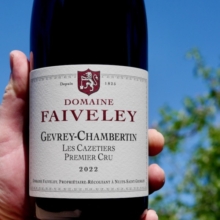
From fresh red fruits to darker, spicier fruit. Earthy, savoury, truffley, perfumed, floral characters are all in the mix. We see aroma, flavour and texture layered in from inclusion of stalks, whole bunches, techniques like carbonic maceration, cold soaking (maceration), oak use and beyond. In their youth, good Burgundies are often tightly wound, and less giving. Plush, supple textures are the hallmark of good Burgundy, although some more robust wines are a pleasure to devour as well. As a generalisation, we’ve seen a shift to a more gentle extraction of tannins and wines that are more approachable by those who have historically made more extracted Pinot in Burgundy. Leroux’s efforts in Pommard and Faiveley’s efforts across the region are good examples.

They often go into a dip for a few years after bottling and emerge transformed. A fully mature top-end Burgundy is entrancing, intoxicating, and, has such incredible expression and personality that you can be happy just smelling it! The secondary development of these wines offers incredible harmony, they become seamless, complexity lifts to a new level, yet it is hard to pick out any individual flavours and aromas. The best manage the trick of having incredible depth of length of flavour yet a light presence, dancing across your palate!

We’re writing a series of posts exploring the villages of Burgundy that you can read in the Wine Bites Mag.

The counterpoint is that Burgundy can be a dismal experience with many wines banking on the name and classification of their vineyard to charge prices they are not worthy of. It can be a minefield if you don’t know what you’re looking for. Equally, there are still some affordable hidden gems!

For many years the new world tried to make great Burgundy instead of great Pinot. With growing experience, confidence, and, balanced, old vine fruit, new world makers are simply making the best possible expressions of Pinot they can from their sites. Broad experimentation is still ongoing as always with wine, but, has slowed a little. Focus on fruit sorting and gentle handling has allowed almost infinite control of the ‘infusion’ of tannins, colour, and, flavour from each berry, as opposed to extraction. Great experience with élévage has resulted in great clarity of how to expose the wines to oxygen and sulphur and achieve more expression from the end wines.

All in all new world wines are competing with Burgundy up to all but the highest level wines, and, with the prices of Burgundy on upward trajectory are great value drinking.

New world wines tend to be more immediately giving and opulent than their Burgundian counterparts. Not as long-lived, they still undergo a transformation as they age, although, perhaps, not to the same degree as the greatest Burgundies.

On top of all of this, climate, change is having a dramatic effect, both in the New and Old World. Vintages are more extreme in Burgundy, picking times are earlier than they were a decade ago, although partly as a result of balanced old vines in the new world.

The best wines will come from the growers and makers who are agile, react and learn from the change.
2019 Clos de Tart


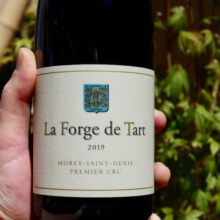
Clos de Tart 1er Cru ‘La Forge de Tart’ 2019

Pinot Noir | Morey-Saint-Denis, France

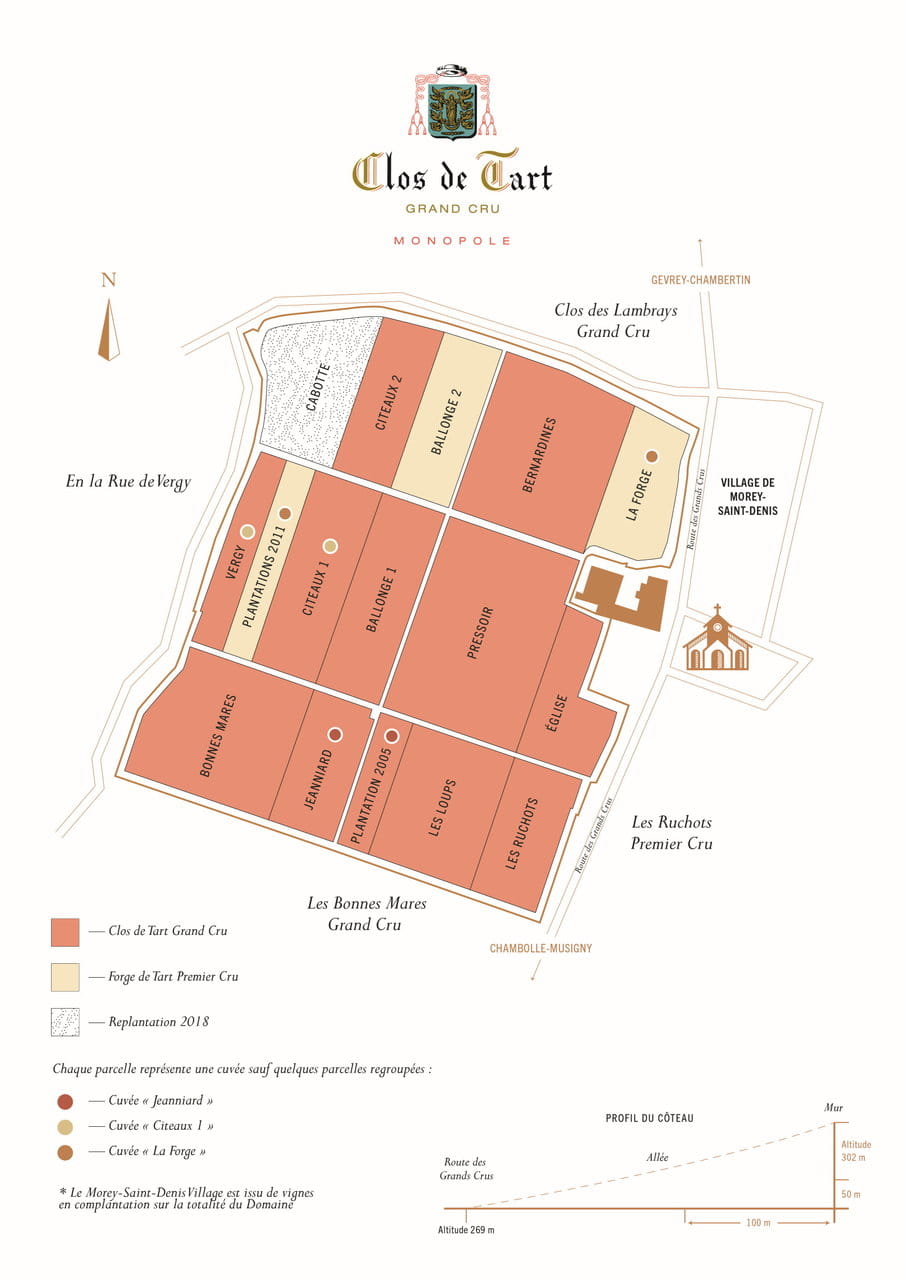
“This comes from the section known as La Forge, plus a young vine planting from 2011, and “Ballonge 2” where the plant selection could be better – it will be top-grafted shortly. One third whole bunch in the Ballonge component makes about 15% in all. This is a glowing purple colour, without the black. A light reduction on the nose which later shows as toasty barrel. Very complete, sensual, with good unforced acidity, more red fruit than black. Still a certain masculinity. Surprising leng
$780
$760ea in any 3+
$740ea in any 6+

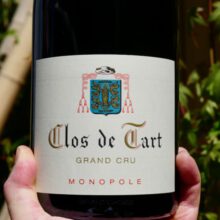
Clos de Tart Grand Cru Monopole MAGNUM 2019

Pinot Noir | Morey-Saint-Denis, France

“70% new wood. Purple black, with a light reduction on the nose, but a massive heart to it. Waves of fruit, red and black fighting it out, incredible intensity through the middle, a very good little touch of acidity at the back. Clos de Tart is never going to be a sensual wine though there is plenty of flesh on the bones. Perfectly judged ripeness here. Probably a bit more than 50% whole bunch has been used overall, but the decision is made for each individual cuvee. I retasted the 2019 having

“A much more floral suffused nose reflects notes of essence of plum, cassis, black raspberry liqueur, herbal tea and discreet wood influence. There is excellent volume and mid-palate density to the sappy, refined and tautly muscular larger-scaled flavors that coat the palate on the lingering and firmer finish that is shaped by relatively fine-grained tannins on the balanced finish where a subtle hint of warmth slowly emerges. This is still very compact and clearly evolving but it should be terrific in time.” Drink 2034+
Allen Meadows – Burghound.com 93-95 Points

“70% new wood. Purple black, with a light reduction on the nose, but a massive heart to it. Waves of fruit, red and black fighting it out, incredible intensity through the middle, a very good little touch of acidity at the back. Clos de Tart is never going to be a sensual wine though there is plenty of flesh on the bones. Perfectly judged ripeness here. Probably a bit more than 50% whole bunch has been used overall, but the decision is made for each individual cuvee. I retasted the 2019 having just tasted the 2018 wines from the estate, which showed the 2019 in a fresher light. The bouquet holds up really well and there is a terrific mineral crunch to finish. The red fruit starts to take the lead and the precision of this first class Clos de Tart was clear to see.”
Jasper Morris – insideburgundy.com 96-99 Points

“The 2019 Clos de Tart Grand Cru is very promising indeed, wafting from the glass with notes of wild berries, peonies, rose hips, warm spices, sweet soil tones and musk. Full-bodied, velvety and layered, it’s deep and concentrated, with lively acids, refined tannins and a long, perfumed finish. Matured in 70% new oak, this is a much more dynamic, classically proportioned and, indeed, soulful wine than its 2018 counterpart.”
William Kelley – Parker’s Wine Advocate 94-96 Points

“The 2019 Clos de Tart Grand Cru is first vintage where winemaker Alessandro Noli has 100% responsibility and so the buck stops with him. Firstly that dialling down of new wood was the correct decision because already it is seamlesly entwined within the aromatics, allowing the quite plush Dorset plum, bilberry and light estuarine aromas to flourish from the glass. Impressive delineation here. The palate is medium-bodied with fine grain tannins, very well judged acidity, great harmony from the start. Good salinity, that saltiness leaving a residues on the tongue and leaves it tingling and it feels reassuringly persistent. I think this is a great success for Noli and doubtless it will age well over the next 25-30 years. Welcome to the new Clos de Tart.”
Neal Martin – Vinous 96-98 Points

Click to enlarge 🔎

Filters & Sorting

Domaine Louis Jadot Clos Vougeot Grand Cru 2019

Pinot Noir | Vosne-Romanée, Burgundy

"Muscular and powerful, the 2019 Clos Vougeot Grand Cru (Domaine Louis Jadot) opens in the glass with aromas of cherries, sweet berry fruit, raw cocoa, spices, rose petals and licorice. Full-bodied, layered and concentrated, with rich structuring tannins and lively acids, this is built for the long haul."William Kelley, The Wine Advocate
$495
$475ea in any 3+
$455ea in any 6+
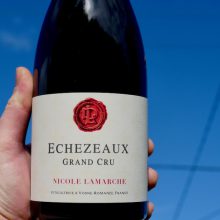
Domaine Nicole Lamarche 'Echezeaux' Grand Cru 2020
🦄The Unicorns Are Here!!🦄

Domaine Nicole Lamarche ‘Echezeaux’ Grand Cru 2020

Pinot Noir | Vosne-Romanée, Burgundy

Sometimes when your vineyard is surround that's OK especially when it's surrounded by DRC! “Ripe and nicely fresh aromas of plum, dark currant, red cherry, anise and jasmine tea give way to succulent, round and delicious medium-bodied flavors that also possess a beguiling texture while displaying excellent depth and persistence on the youthfully austere and well-balanced finish..” Burghound 91-94 PointsI've had the pleasure of drinking La Grande Rue a couple of times. It's the ben
$497
$477ea in any 3+
$457ea in any 6+
Sometimes when your vineyard is surround that's OK especially when it's surrounded by DRC! An earthier and more somber if nicely layered nose is comprised by notes of both red and dark berries along with a whisper of the sauvage along with a floral top note. The delicious and rounded medium weight flavors possess focused power that really comes up on the dusty, chalky, youthfully austere and impressively persistent finale. This built-to-age effort is going to require at least some patience as it
$497
$477ea in any 3+
$457ea in any 6+
Weber noted that they protected the vines with warming pots that allowed for a yield of about 22 hl/ha. More obvious oak influence stops short of fighting with the spicy and earthy purple fruit-scented nose. There is notably more density, power and volume to the bigger-bodied flavors that possess a seductive mouthfeel that contrasts somewhat with the robust but not rustic finale that delivers markedly better depth and persistence. 2029+ Sweet spot Outstanding ♥Allen Meadows, Burghound 91-9
$510
$490ea in any 3+
$470ea in any 6+
A more deeply pitched nose combines notes of poached plum and exotic tea with those of violet, lilac and a suggestion of wood. The richer and more voluminous flavors possess more evident power if not the same refinement on the more structured finale. This is also nicely balanced but in contrast to the Groseilles, it’s not likely to drink especially well before 8 to 10 years have passed. (from a .19 ha parcel) 2031+ ♥ OutstandingAllen Meadows, Burghound (91-93) Points
$515
$495ea in any 3+
$475ea in any 6+
"Discreet but perceptible wood frames the ripe essence of plum, red and dark cherry, violet and a touch of violet. There is equally good energy to the suave, round and richer medium-bodied flavors that possess a sophisticated mouthfeel thanks to the relatively fine-grained tannins shaping the serious, firm, and firmly austere, finale. Patience advised. ♥ Drink: 2031+"Allen Meadows, Burghound
$525
$505ea in any 3+
$485ea in any 6+
Background hints of wood can be found on the ripe and nicely fresh aromas of poached plum, black cherry and violet. The round, velvety and rich medium weight plus flavors possess fine mid-palate concentration before culminating in a youthfully austere, serious, compact and sneaky long finale. This potentially outstanding effort could use better depth so at least some patience should prove beneficial and 12 to 15 years would be better still.  (the 5+ ha Clos is composed of approximately 80% Peti
$525
$505ea in any 3+
$485ea in any 6+
The 2019 Morey-Saint-Denis 1er Cru Vieilles Vignes is shaping up beautifully, mingling aromas of dark berry fruit, orange rind, espresso roast, forest floor and warm spices in an incipiently complex bouquet. Medium to full-bodied, layered and concentrated, it's deep and complete, its serious long-haul structure largely concealed by a lively core of fruit. As usual, this "baby Clos de la Roche" derives from a parcel planted in the 1930s and 1940s that straddles the climats Faconnières and Chenev
$539
$519ea in any 3+
$499ea in any 6+
Les Champonnets, situated on the same line as the Grands Crus and very near to Ruchottes-Chambertin, is tucked up high near the entrance of the Lavaux combe (or valley). Mortet's parcel here used to make up almost half of his 1er Cru bottling above, and 2014 was the first year this parcel was vinified and bottled separately. It comes from a combination of very old vines (60-70 years old) and some younger, at around 30 years old. The soil is deep, yet with a strong limestone component that shows
$548
$528ea in any 3+
$508ea in any 6+
Les Champonnets, situated on the same line as the Grands Crus and very near to Ruchottes-Chambertin, is tucked up high near the entrance of the Lavaux combe (or valley). Mortet's parcel here used to make up almost half of his 1er Cru bottling above, and 2014 was the first year this parcel was vinified and bottled separately. It comes from a combination of very old vines (60-70 years old) and some younger, at around 30 years old. The soil is deep, yet with a strong limestone component that shows
$548
$528ea in any 3+
$508ea in any 6+
Les Champonnets, situated on the same line as the Grands Crus and very near to Ruchottes-Chambertin, is tucked up high near the entrance of the Lavaux combe (or valley). Mortet's parcel here used to make up almost half of his 1er Cru bottling above, and 2014 was the first year this parcel was vinified and bottled separately. It comes from a combination of very old vines (60-70 years old) and some younger, at around 30 years old. The soil is deep, yet with a strong limestone component that shows
$548
$528ea in any 3+
$508ea in any 6+
Well I couldn't find a review of this and haven't had a chance to taste it. Given the other 9 wines from 2016 and 2017 I've tried it's hard to see this being anything but true to form and simply put a 2017 version of the 2016!My Note on the 2016:Opens with juicy crunchy fruit that takes just a little while to settle in. More immediately overt than the others. There’s a build in tannin here that when you relate it back to the vineyard location near Rugien and listen to Anne Parents
$550
$530ea in any 3+
$510ea in any 6+