Closure

Diam

Diam is a natural cork agreagate closure. The raw cork is preprocessed to remove cork taint. The seal has different ageing potential as selected by the maker between 5 and 30 years. You’ll find the number on the cork indicating this. Coravin needle use is possible.

Filters & Sorting

En Remilly is one of Lamy’s prestige terroirs, sitting above the Côte de Beaune’s Grand Cru vineyards and producing one of his finest and most sought-after wines. Lamy has two hectares in this vineyard (planted in 1989) across two distinct parcels that sit just above the Chevalier-Montrachet Grand Cru. One of these parcels is quite near to his Clos de la Chatenière vineyard and is a warmer terroir on a loosely knit mix of clay and limestone. The second is a far rockier site on almost pure
$489
$469ea in any 3+
$449ea in any 6+
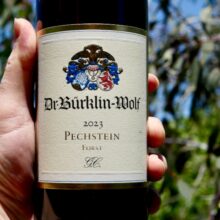
The 2023 Pechstein G.C. opens with a deep, fresh, pure, elegant and lemony as well as flinty bouquet that needs a little while to open up. Full-bodied, refined and elegant on the palate, this is an intense, very complex and aromatic, super sustainable and finely tannic Pechstein with fennel seed flavors and rare calm and balance on the saline finish, which makes this an outstanding relaxed and very distinctive Riesling. 12.5% stated alcohol. Diam 30 cork. Tasted at the domaine in January 2025..
$550
$530ea in any 3+
$510ea in any 6+
Jasper Morris 92-95 Points
$575
$555ea in any 3+
$535ea in any 6+
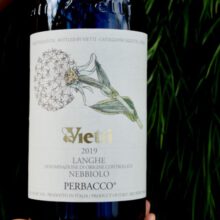
Two of the best value Neb's on the market have to be Vietti's Castiglione Barolo and this wine Vietti's Perbacco! The 2020 Langhe Nebbiolo Perbacco is another terrific entry-level wine from Vietti. In this vintage, the Perbacco is especially fine. Sweet dried cherry, herbs, mint, crushed flowers, anise and orange peel grace this striking, alluring Nebbiolo. There's tons of depth and sheer pedigree, things that have not always been present in recent editions. For years, Perbacco was a very seriou
$590
$570ea in any 3+
$550ea in any 6+
A murger is a pile of stones or a wall made from rocks extracted from a vineyard’s soil. The vineyard name (roughly translating to “the wall of dog’s teeth”) evokes the fragmented, jagged stones that abound on the soil. It’s a rocky hillside vineyard that borders the 1er Cru Puligny vines of Champ Gain (not Folatières as suggested in Neal Martin’s note below) and sits above Montrachet, literally on the “Mont-Rachet”. Then again, such mapping can be deceptive; when you sta
$617
$597ea in any 3+
$577ea in any 6+
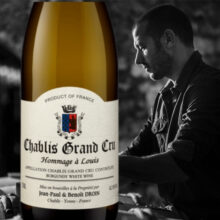
This is the largest and most famous Grand Cru; its fame based on its history as one of Chablis’ first vineyards. The appellation enjoys a southerly aspect with very white, dense and deep clay soil, resting on a limestone bed 80 cm below the ground, which brings to the wine those spicy notes so typical of this terroir.Note: from 4 separate parcels totaling 4.11 ha, 3 of which are all at the top of the slope.A cool, restrained and airy nose grudgingly divulges its combination of lem
$662
$642ea in any 3+
$622ea in any 6+
This singular wine comes from 0.7 hectares in Derrière chez Edouard, planted 20 years ago at a density of roughly 30,000 vines to the hectare (the vines are spaced around 30cm apart in 1m rows). At such a density, Lamy typically gets a maximum of three tiny clusters per vine (sometimes one and sometimes none!) and the entire plot only yields enough juice to fill the contents of a single barrel. Lamy’s trials with higher density have produced completely different wines and he has subsequently
Lamy already makes a terrific, old-vine cuvée from just under a hectare in Les Tremblots, planted between 1946 and 1970. The HD portion of the parcel has massale selection vines interplanted between a few of these rows, bringing the density up to 22,000 vines per hectare. Although Lamy admits he has created a rod for his own back—his high-density parcels require more than twice the work of his regular parcels—he is obviously thrilled by the class of wine he is achieving. The ripeness, ac
The Lamy family have farmed the vines here for three generations, and the parcel borders the southeast corner of Bâtard right next to Madame Bize-Leroy’s Domaine d’Auvenay plot. Is it worth mentioning that d’Auvenay’s Criots is far more expensive? Olivier Lamy has taken the density here up to 24,000 vines per hectare, and unlike d’Auvenay (and most of its Grand Cru contemporaries), this wine is entirely unfettered by new oak (instead, it is raised in a single 250-litre, six-year-o