Location

France

France has gone on a roller coaster ride. A booming industry was decimated by mildew and phylloxera in the second half of the 19th century, then two World Wars in the 20th century. Thirst won in the end, and, France is now the World’s #2 wine producer by volume.

Without doubt the two greatest drivers of the French wine industry have been the concept of Terroir and the establishment of the Appellation d’origine contrôlée.

Combined these have defined a philosophical approach to growing and making wine and enforced strict controls of grape varieties that can be planted in each region and winemaking practices that can be employed.

Frances has come through with flying colours, successive generations have been better trained, spent time in the New World exposing them to different techniques for growing vines and making wine, and, have been able to push the boundaries to achieve excellence.

First Records of Wine Production – Go back millennia to the 6th century BC. The Greeks kicked things off with the Romans ramping things up. Those Romans got around and took their vines and wines with them! Over time the wealth of the Monastries took over much of the production. Nobility took their turn until the guillotine fell!

Founding Figures – In ‘recent times’, technical advancement in the industry were driven by Minister of the Interior, Jean-Antoine Chaptal following the French revolution, work done by Louis Pasteur in the 19th century, and, the Emperor Napoleon III commissioning of the 1855 classification of Bordeaux.

Area Planted – with around 630,000 hectares of vines France produces 17% of the World’s wine

Established Regions – When we think French wine, the regions that immediately come to mind are Champagne with its fizz, Bordeaux’s Cabernet blends and Sauternes, Burgundy’s Pinot and Chardonnay, the Rhône Valley’s Shiraz, Grenache, Marsanne & Roussane, and, Alsatian Riesling.

Most Common Varieties

White – From greatest area planted down the top red varieties are Ugni Blanc, Chardonnay, Sauvignon Blanc, Melon de Bourgogne, Sémillon, Chennin Blanc, Colombard, Muscat Blanc à Petits Grains, Grenache Blanc, Viognier, and, Riesling.

Red – The list doesn’t surprise the order they come in does from greatest area planted down the top red varieties are Merlot, Grenache, Syrah, Carignan, Cabernet Sauvignon, Cabernet Franc, Gamay, Pinot Noir, Cinsaut, Pinot Meunier and Mourvèdre.

Up and Coming Regions – In recent times we’ve seen the Rosé of Provence, the hidden gems from the Languedoc, Jura and Loire Valley increasing in popularity.

Filters & Sorting

Laurent Ponsot Gevrey-Chambertin Cuvée de l’Aulne 2016

Pinot Noir | Gevrey-Chambertin, Burgundy

Check out Burghound's review! The last time we shipped a Ponsot Gevrey, it was the Domaine Ponsot Cuvée des Abeille. Ponsot’s modus of late picking always seemed to heighten this Gevrey villages primordial persona, and it’s good to note the leopard has not changed its spots. Ponsot’s sources in 2016 include purchased grapes (vinified by Laurent), and he has also bought a couple of barrels to augment the cuvée in this vintage. Regardless, Laurent has again fashioned an outstandingly
"A more floral suffused nose speaks of spiced aromas of red currant, cherry, violet and lavender. The fleshy, round and nicely refined flavors possess good delineation on the bitter cherry pit-inflected finish that offers just a bit more overall depth and persistence. Note that this will need at least a few years of cellaring first."Allen Meadows, Burghound
$270
$260ea in any 3+
$250ea in any 6+

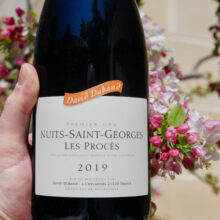
David Duband Nuits-Saint-Georges 1er Cru ‘Les Proces’ 2019

Pinot Noir | Nuits-Saint-Georges, Burgundy

"Aromatically this too is markedly floral in character with its discreetly spiced nose of high-toned red currant, pomegranate and soft earth influence. There is both good vibrancy and detail to the round and seductively textured medium-bodied flavors that possess fine length on the balanced finish if not quite the same lovely complexity. This mildly austere effort should age well over the medium to even longer-term. Drink 2030+."Allen Meadows, Burghound
$270
$260ea in any 3+
$250ea in any 6+

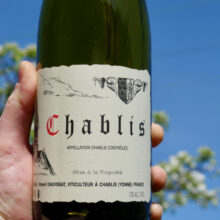
Vincent Dauvissat Chablis 2018

Chardonnay | France, Burgundy

"A ripe and wonderfully fresh nose also flashes plenty of classic Chablis character on the white-fleshed fruit and floral nose where background notes of iodine and oyster shell are present. The sleek, delicious and vibrant medium weight flavors exude evident minerality on the clean, dry and balanced finale where a touch of bitter lemon character slowly emerges. This impressively intense effort is a quality Chablis villages. Drink 2025+ ♥"Allen Meadows, Burghound
Ripe aromas of plum, black cherry and earth enjoy a floral top note accompanied by a hint of the sauvage. There is excellent volume to the suave and seductive yet sleek medium-bodied flavors that possess a caressing texture, all wrapped in a finer but equally structured finish. Good if not truly distinguished quality here. Drink: 2026+Allen Meadows, Burghound
$270
$260ea in any 3+
$250ea in any 6+
This is openly floral with its pretty and relatively high-toned nose of fresh red currant, pomegranate and herbal tea aromas that are trimmed in a hint of the sauvage. The lively and sleekly textured middle weight flavors exude a subtle bead of minerality on the well-delineated yet supple finish that is supported by dusty tannins on the slightly warm finale. This is a very good Gevrey villages that isn't quite so structured but one that will still need at least a modicum of patience. Drink: 2027
$270
$260ea in any 3+
$250ea in any 6+
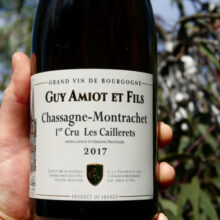
Lovers of flavourful Chardonnay will be happy here! Excellent gear. A step up in acid levels from 'Les Vergers'. Lovely flavour profile here. From Meadow's notes the flavour profiles is much the same. What clearly has changed over a couple of years in the bottle is the expression. No longer the shy, reticent teenager. Now a vivacious creature with a certain delicacy and that full flavoured profile I've come to expect from Amiot. The flow and texture across palate is excellent with a fine finish.
$271
$261ea in any 3+
$251ea in any 6+
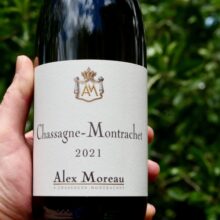
Where the Bourgogne is immediately approachable the village Chassagne Blanc needs a little more time. 1/3 from Les Masures next to Morgeot 2/3 Puligny side of Chassagne. Again this shows a wonderful progression through the quality standards in Burgundy. Jumping a rung in the ladder, the energy and precision is showing here. Whilst a full percentage lower in alcohol than the Bourgogne, it has greater depth and length. Current tightly wound, beautiful linear acid is supported nicely by a little te
$272
$262ea in any 3+
$252ea in any 6+
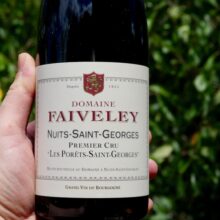
Stunning nose of Amarena cherry. Amazing concentration with wonderful elegance and vitality. Super-silky tannins for Nuits-Saint-Georges. Very long, intense yet delicate finish.95-96 Points, Stuart Pigott – James Suckling
$272
$262ea in any 3+
$252ea in any 6+
Well I couldn't find a review of this and haven't had a chance to taste it. Given the other 9 wines from 2016 and 2017 I've tried it's hard to see this being anything but true to form and simply put a 2017 version of the 2016!My Note on the 2016:Opens with juicy crunchy fruit that takes just a little while to settle in. More immediately overt than the others. There’s a build in tannin here that when you relate it back to the vineyard location near Rugien and listen to Anne Parents
$275
$265ea in any 3+
$255ea in any 6+
Bougros sits on a very steep slope, with a gradient of more than 30%, facing due south at the foot of the hill. The shallow soil, a mixture of clay and gravel, prevents excessive yields resulting in complex, robust wines.Note: from a 2.2 ha parcel at the bottom section of the vineyard; even so, the vineyard is so steep here that it must be worked entirely by hand as tractors would be dangerous to use.In a sense, the 2020 Chablis Grand Cru Bougros Côte Bouguerots offers a resumé of
$275
$265ea in any 3+
$255ea in any 6+

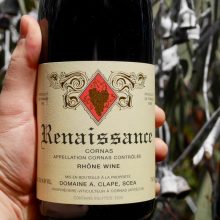
Auguste Clape Cornas ‘Renaissance’ 2020

Shiraz/Syrah | Rhône Valley, Cornas

I tasted two components that will make up the bulk of the 2020 Cornas Renaissance, both still in foudre. From Patou and 15- to 20-year-old vines, a medium to full-bodied sample featuring mentholated red plum notes, chewy tannins and mouthwatering acids (90 - 92). From Reynard and 30-year-old vines, a medium to full-bodied sample that showed more cassis fruit, silky tannins and great freshness (93 - 95). They should make a lovely Cornas for drinking over the next 10-15 years. Joe Czerwinski, The
$275
$265ea in any 3+
$255ea in any 6+